The Race to Reach Healthy IRR
The global landscape of real estate and infrastructure is witnessing the rise of mega developments, multi-billion-dollar projects designed to transform regions, redefine economies, and establish iconic landmarks. While these ambitious undertakings hold the potential to generate substantial economic benefits and enhance urban experiences, they also pose a daunting challenge: achieving a healthy Internal Rate of Return (IRR).
Understanding IRR in the Context of Mega Developments
The IRR is a critical metric in evaluating the financial viability of any development project. For mega developments, which often span decades and encompass diverse components such as residential, commercial, hospitality, and infrastructure elements, achieving a healthy IRR is pivotal. It not only ensures profitability but also sustains investor confidence and secures future funding.
However, the scale, complexity, and timelines associated with giga projects amplify the risks and uncertainties. These factors make it challenging to balance the immediate capital outlay with long-term financial returns.
You May Also Like to Read: Tax Impact on Equity and Project IRRs
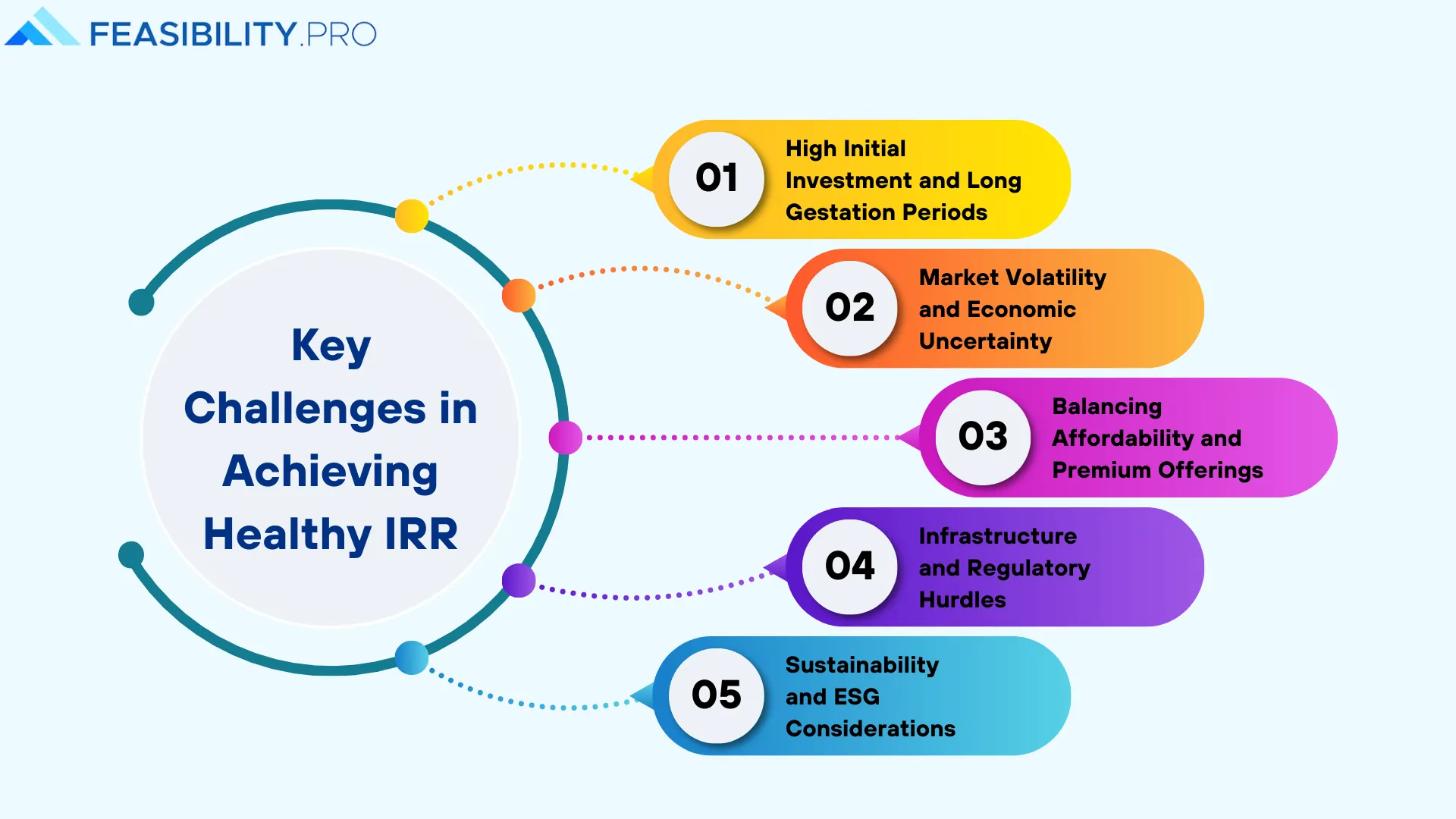
Key Challenges in Achieving Healthy IRR
1. High Initial Investment and Long Gestation Periods:
Giga developments require enormous upfront capital, often running into billions of dollars. The long gestation periods, spanning years or even decades, mean delayed returns on investment, which can strain cash flows and investor patience.
2. Market Volatility and Economic Uncertainty:
Real estate markets are inherently cyclical, and the extended timelines of giga developments expose them to market downturns, inflation, and shifts in demand. Economic shocks or geopolitical events can further disrupt projections.
3. Balancing Affordability and Premium Offerings:
Developers must cater to a broad spectrum of buyers and tenants, balancing affordable units to ensure absorption with high-margin premium offerings to maximize profitability. Misjudging market demands can result in unsold inventory and reduced cash flow.
4. Infrastructure and Regulatory Hurdles:
The sheer scale of giga projects necessitates significant investments in supporting infrastructure—transportation, utilities, and public services. Navigating regulatory landscapes, securing permits, and addressing community concerns can lead to delays and cost escalations.
5. Sustainability and ESG Considerations:
Modern developments are increasingly expected to adhere to environmental, social, and governance (ESG) standards. While integrating sustainable practices enhances the long-term value, it also increases upfront costs and operational complexity.
Know More About: How to explain IRR to anyone? Video
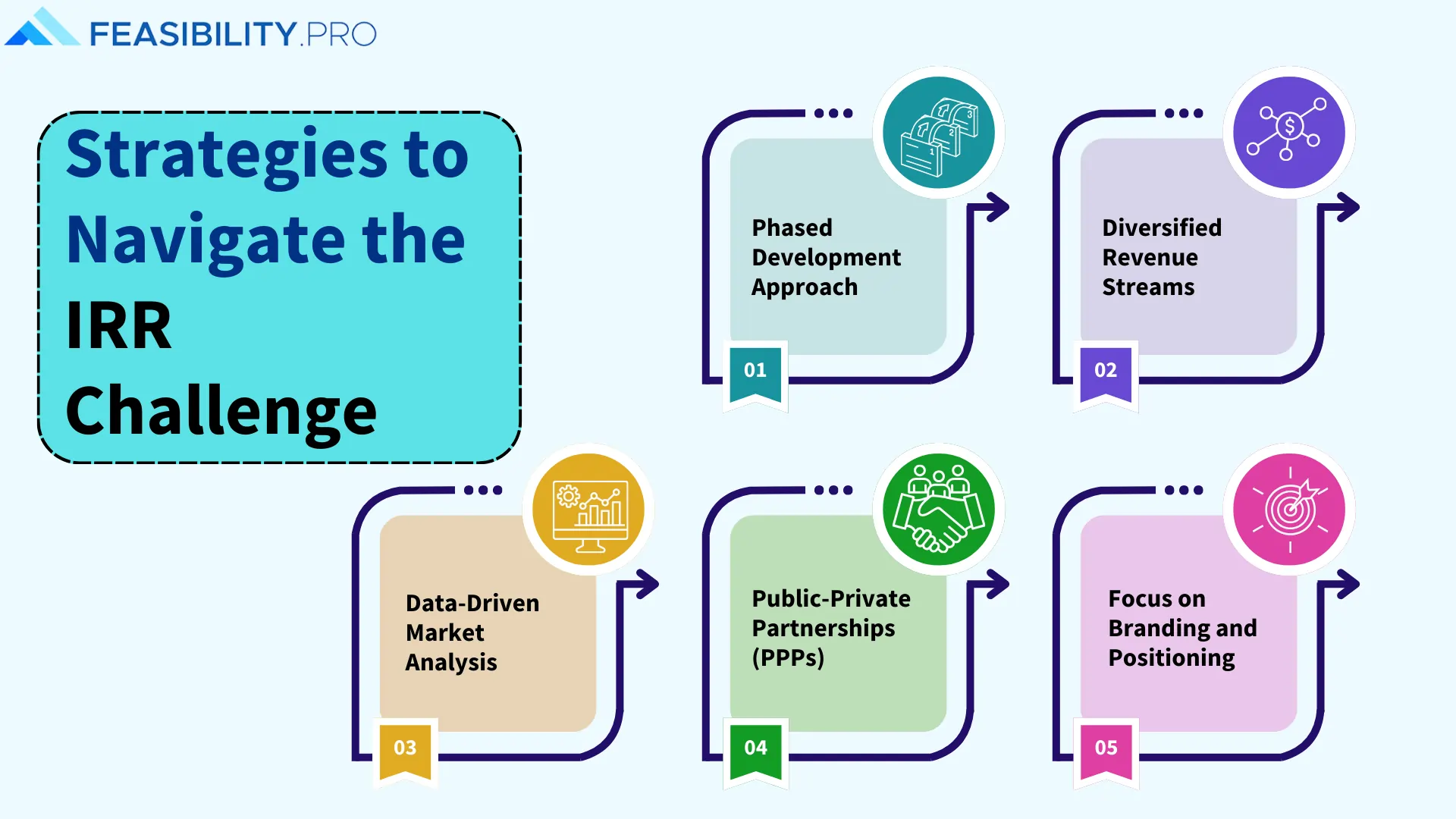
Strategies to Navigate the IRR Challenge
1. Phased Development Approach:
Dividing the project into manageable phases allows developers to generate early cash flows and reinvest in subsequent stages. This approach mitigates financial risks and aligns with market absorption rates.
2. Diversified Revenue Streams:
Incorporating mixed-use elements such as retail, hospitality, and entertainment can create multiple income streams, reducing reliance on a single asset class. Leasing models, joint ventures, and revenue-sharing agreements can also enhance returns.
3. Data-Driven Market Analysis:
Leveraging advanced analytics to understand market trends, buyer preferences, and pricing dynamics ensures that offerings align with demand. Regular recalibration of strategies based on data insights helps maintain market relevance.
4. Public-Private Partnerships (PPPs):
Collaborating with government entities can ease the burden of infrastructure development and regulatory compliance. PPPs also enhance project credibility and attract additional funding.
5. Focus on Branding and Positioning:
Establishing a unique identity for the development can command premium pricing and foster investor and end-user trust. Branding efforts should emphasize quality, lifestyle, and sustainability.
You May Also Like to Read: Project IRR and Equity IRR: A Curious Connection
Conclusion
The race to achieve a healthy IRR in giga developments is as much about strategic foresight as it is about operational execution. Developers must navigate a complex web of financial, market, and operational challenges while remaining adaptable to changing circumstances.
Success hinges on a holistic approach that balances immediate financial imperatives with long-term vision—ensuring that these monumental projects not only redefine skylines but also deliver sustainable returns for all stakeholders.
Thank you For Reading: The Race to Reach Healthy IRR: A Challenging Balancing Act
FAQs
What is IRR and why is it critical?
IRR (Internal Rate of Return) is vital for mega projects, indicating profitability and investor confidence amidst their vast scale and long timelines.
What are the biggest challenges to healthy IRR?
High investment, long gestation, market volatility, balancing affordability/premium, infrastructure hurdles, and ESG considerations challenge healthy IRR.
How to navigate IRR challenges?
Phased development, diversified revenue, data analysis, PPPs, and strong branding help navigate the complexities and achieve healthy IRR.