
Soft vs Hard Costs in Development Projects
When planning a development project, one of the first steps is building an accurate budget. However, costs can quickly spiral if you don’t know exactly what you’re accounting for. This is why understanding the difference between soft vs hard costs in development projects is essential.
Both types of costs are critical to completing your project, but they differ in nature, timing, and predictability. Let’s break them down in clear terms.
You May Also Like to Read: How Feasibility Studies Prevent Costly Mistakes in Real Estate Development
What Are Hard Costs?
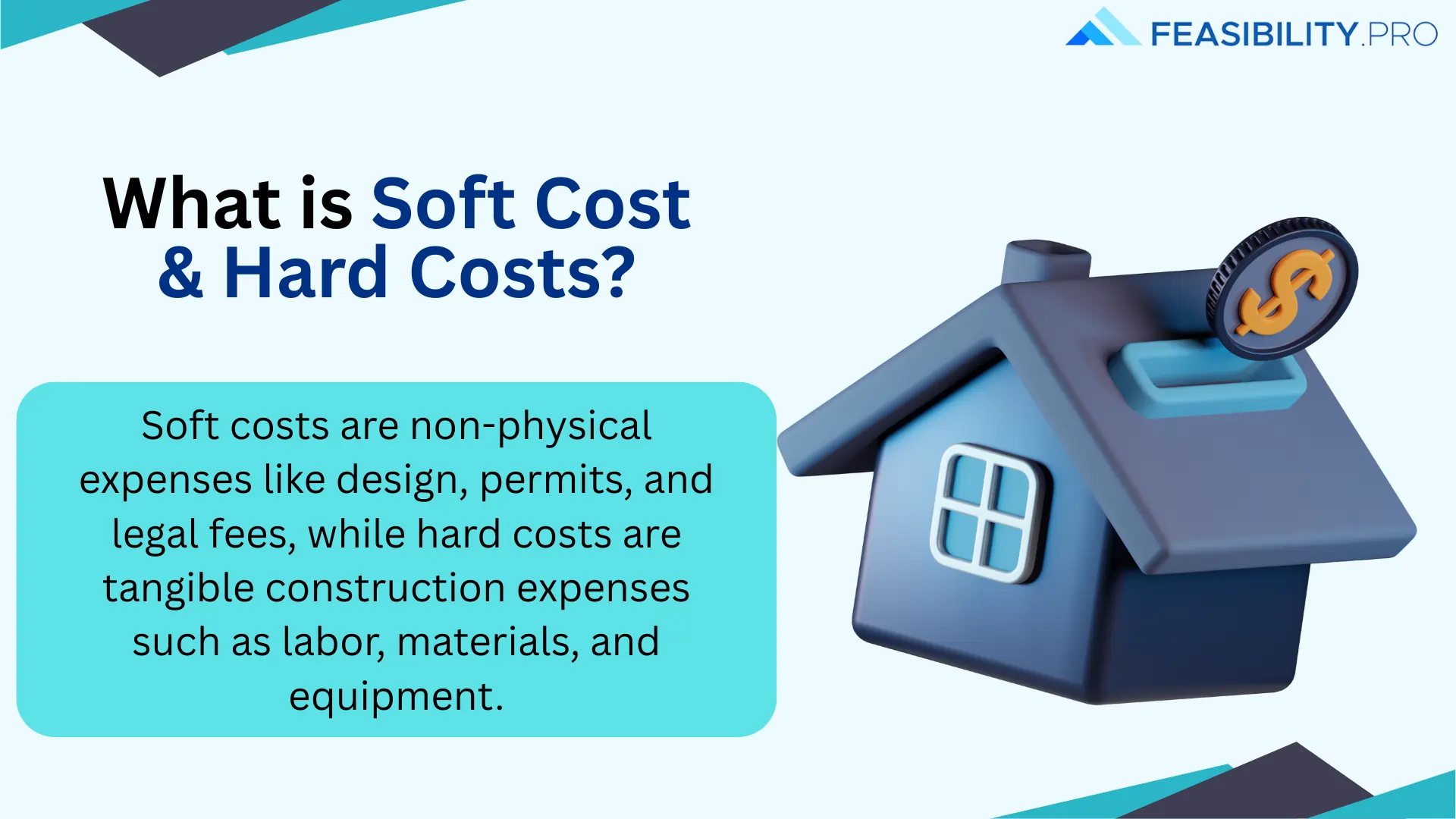
Hard costs are direct, tangible expenses tied to the physical construction of a project. They are sometimes called brick-and-mortar costs because they include everything you can touch, see, or physically measure.
These costs often make up the bulk of a project budget and are easier to estimate than soft costs.
Examples of Hard Costs:
- Construction materials: Steel, concrete, wood, roofing, siding, insulation, tiles, paint.
- Labor: Wages for construction workers, subcontractors, and skilled trades such as electricians, plumbers, and HVAC technicians.
- Site work: Excavation, grading, paving, landscaping installations, retaining walls.
- Interior fixtures: Cabinets, flooring, lighting, counters, appliances that are built-in.
- Building systems: Electrical wiring, plumbing, heating, ventilation, air conditioning (HVAC).
- Permanent outdoor structures: Benches, gazebos, walkways.
Why Hard Costs Are Easier to Estimate?
Material prices may fluctuate with market conditions, but they’re still more predictable than soft costs. You can request supplier quotes and factor in labor rates to build accurate estimates.
You May Also Like to Read: How to Use a Residual Land Value Tool to Maximize Your Property Development Profits?
What Are Soft Costs?
Soft costs are indirect, intangible expenses that support a project but don’t physically create the building or structure. They often occur before construction begins, continue during the project, and sometimes extend after completion.
Examples of Soft Costs:
- Planning and design fees: Architectural drawings, engineering services, feasibility studies, surveys, landscape design.
- Permits and legal costs: Building permits, zoning applications, inspections, environmental compliance, legal representation.
- Financing costs: Loan interest, lender fees, bank charges, bond fees.
- Administrative expenses: Office staff salaries, project management fees, software, communication tools.
- Marketing and leasing: Advertising campaigns, brochures, websites, open houses.
- Insurance: Builder’s risk, liability, worker’s compensation, property insurance.
- Post-construction costs: Property management, maintenance contracts, security services.
Why Soft Costs Are Harder to Predict?
They can vary significantly depending on project scope, location, and unforeseen circumstances, such as legal disputes or changes in regulatory requirements.
You May Also Like to Read: What is Land Development Feasibility Study?
Key Differences Between Hard and Soft Costs
Understanding how these costs differ helps you manage budgets more effectively.
Aspect | Hard Costs | Soft Costs |
Definition | Tangible, physical construction expenses. | Intangible, indirect expenses supporting the project. |
Examples | Labor, materials, fixtures, site work. | Permits, design fees, financing, insurance. |
Timing | Primarily during construction. | Before, during, and after construction. |
Ease of Estimation | Easier due to tangible quantities. | Harder due to variability and ongoing nature. |
Budget Share | Usually 60–75% of total budget. | Usually 25–40% of total budget. |
Estimating Hard Costs
When estimating hard costs in development projects, start with:
- Material take-offs from your plans and specifications.
- Supplier quotes for each material.
- Labor productivity rates based on similar past projects.
- Equipment costs including purchase or rental.
- Contingency allowances for price fluctuations.
Example: If steel prices have been volatile, include a percentage buffer in your budget to avoid surprises.
Estimating Soft Costs
Estimating soft costs requires a different approach:
- Research local fees for permits and inspections.
- Request proposals from architects, engineers, and consultants.
- Calculate financing terms and interest based on your project schedule.
- Plan for post-construction costs like property management or marketing.
- Include a contingency fund for legal, regulatory, or design changes.
Example: If your project requires rezoning, the process may take months and involve additional legal and consultant fees.
How Hard and Soft Costs Impact Development ROI
Your return on investment (ROI) depends on controlling both hard and soft costs:
- High hard costs without value engineering can shrink profit margins.
- Underestimating soft costs can lead to budget overruns even if construction stays on track.
A balanced approach—accurate cost forecasting, continuous monitoring, and strong project controls—keeps your development profitable.
You May Also Like to Read: What is Property Development Feasibility Software?
Best Practices for Managing Soft vs Hard Costs
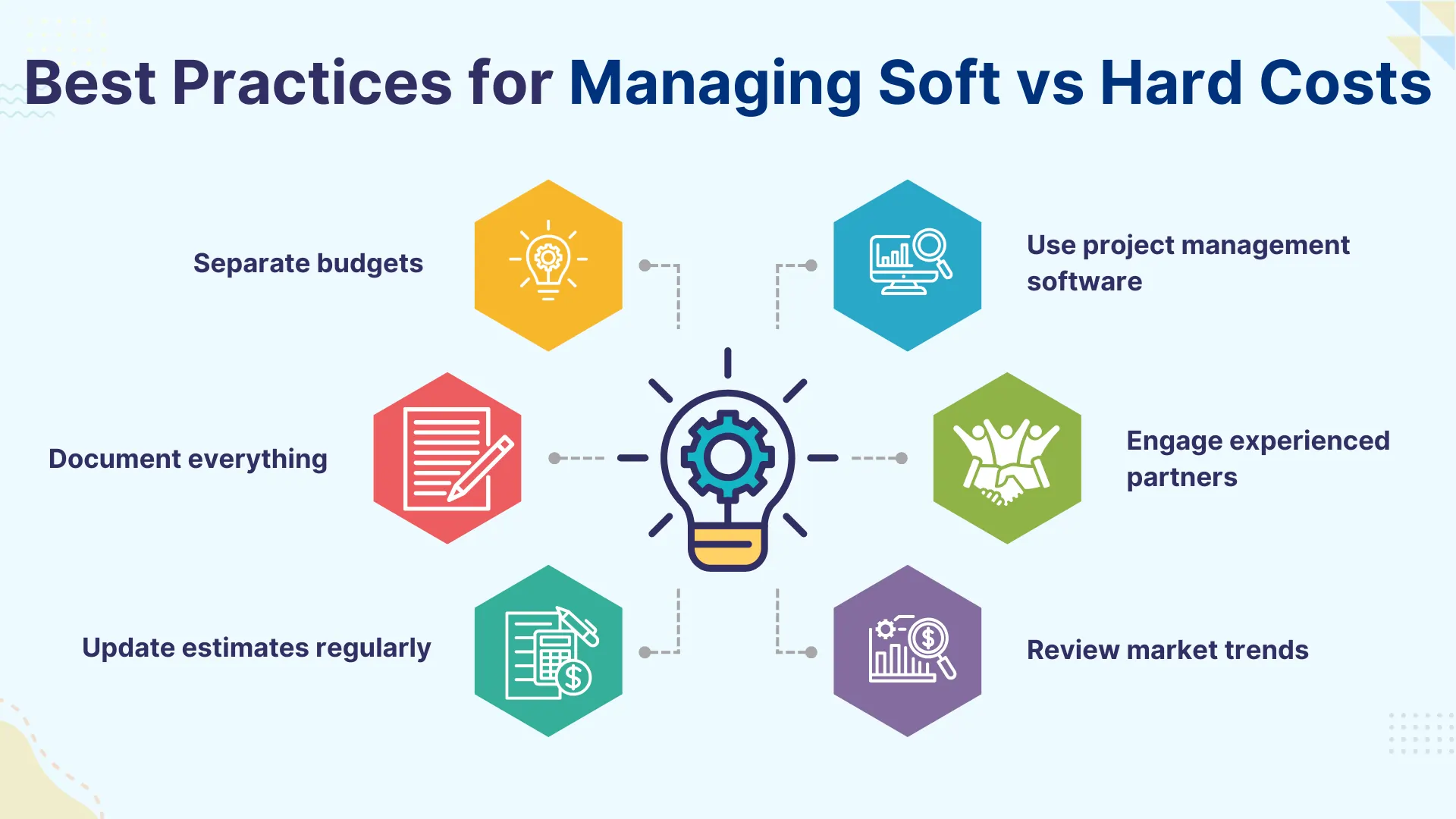
- Separate budgets: Track hard and soft costs independently to identify overruns quickly.
- Use project management software: Real-time dashboards can monitor spending.
- Engage experienced partners: Architects, contractors, and consultants can help foresee hidden expenses.
- Review market trends: Monitor labor rates, material prices, and interest rates regularly.
- Update estimates regularly: Adjust budgets as project details change.
- Document everything: Keep a paper trail of approvals, change orders, and invoices.
Common Mistakes to Avoid
- Ignoring soft costs early: Leads to major shortfalls later.
- Over-relying on fixed bids: Market conditions can change between bid and build.
- Skipping contingency funds: Unexpected events happen—budget for them.
- Not aligning with local regulations: Non-compliance can cause costly delays.
You May Also Like to Read: Real Estate Development Feasibility Study: The Ultimate Guide
Conclusion
Understanding soft vs hard costs in development projects is more than just a budgeting exercise—it’s a strategy for delivering projects on time and within budget.
Hard costs build your structure; soft costs make the project possible. Neglect either, and you risk delays, overruns, and reduced profitability.
By accurately estimating, separating, and tracking both types of costs, you set a solid foundation for development success.