
Maximize Real Estate Investment
Want to maximize real estate investment ? Looking for the right opportunity? Need the right advice for your real estate investment?
If you want do Real estate investment like a pro involves the strategic acquisition, management, and sale of properties like land, residential homes, commercial spaces, and even participation through Real Estate Investment Trusts (REITs) or crowdfunding platforms, all with the goal of generating profit. This could be through rental income from a house, leasing a warehouse to a business, or capitalizing on land appreciation.
The real estate market is dynamic and can be unpredictable. Prices can soar rapidly or decline sharply, making careful, data-driven investment decisions crucial. Success in real estate often demands patience and a long-term perspective. The ultimate goal is to have your real estate investments work for you, generating passive income and building wealth, even when you're not actively working.
To ensure your real estate investment strategy is on track, aim for a Return on Investment (ROI) of at least 8-10%. If your returns fall short, it's a clear signal to re-evaluate your approach and conduct deeper market research.
You might also like to read Real estate investment – How to get started?
Remember, real estate value is fundamentally driven by supply and demand. Understanding these market forces, including how artificial demand can sometimes be created, is key to making informed decisions.
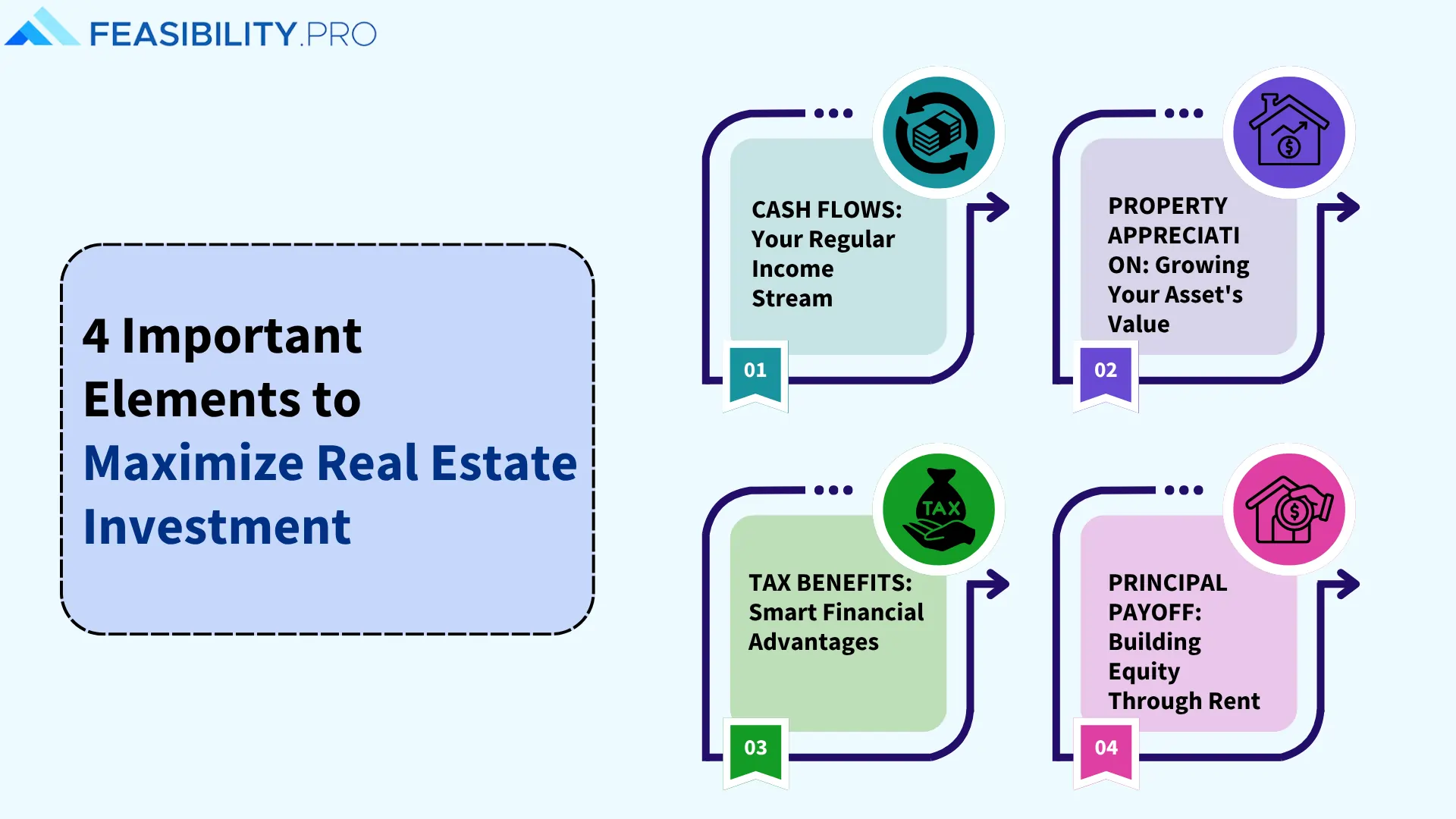
4 Important Elements to Maximize Real Estate Investment
To truly maximize your real estate returns, focus on these four interconnected elements:
- Cash Flow: The lifeblood of any successful investment.
- Property Appreciation: The increase in your property's value over time.
- Tax Benefits: Leveraging deductions and allowances to your advantage.
- Principal Paydown: Using rental income to reduce loan burdens.
CASH FLOWS: Your Regular Income Stream
Cash flow in real estate refers to the net amount of money moving in and out of your property. Positive cash flow means you receive more money than you pay out.
Example:
An investor receives ₹20,000 in rent from a warehouse. After deducting ₹1,000 for repairs and maintenance, ₹500 for taxes, and ₹1,000 for loan interest, the net cash flow is:
₹20,000 (Rent) - ₹1,000 (Repairs) - ₹500 (Taxes) - ₹1,000 (Interest) = ₹17,500 (Net Cash Flow)
So, the cash flow of the tenant will be Rs 17,500.
Understanding and optimizing your cash flow is critical for sustainable real estate income.
PROPERTY APPRECIATION: Growing Your Asset's Value
Property appreciation is a primary objective for most real estate investors. It signifies the increase in the market value of your property over time. Smart real estate investing aims for assets that are likely to appreciate.
Appreciation Formula: Appreciation = Resale value of the property - Original price of the property
There are two main types of property appreciation:
- Forced Appreciation: This type of appreciation is influenced directly by the property owner. You can "force" appreciation by improving the property (e.g., renovations, upgrades) or by optimizing its income and expenses (e.g., increasing rents, reducing operating costs).
- Market-Driven Appreciation: This appreciation occurs due to external market factors beyond the owner's direct control. Examples include an increase in local job opportunities, inflation, population growth in the area, or general economic prosperity.
TAX BENEFITS: Smart Financial Advantages
Many people understand that properties (excluding raw land) can depreciate over time due to wear and tear. However, this depreciation isn't always a negative. In real estate, a calculated amount can be deducted annually from the property's value, known as depreciation expense. This makes the property eligible for tax deductions, significantly benefiting the individual investor or company by reducing their taxable income. Understanding these real estate tax advantages is crucial.
PRINCIPAL PAYOFF: Building Equity Through Rent
For those who use real estate loans to acquire properties, principal payoff is a powerful benefit. When you rent out your investment property, the rental income can be strategically used to cover your mortgage payments, including the principal portion. This effectively means your tenants are helping you build equity in your asset, gradually paying down your loan and increasing your net worth while freeing up your personal cash flow.
You might also like to read Property Investment for Beginners
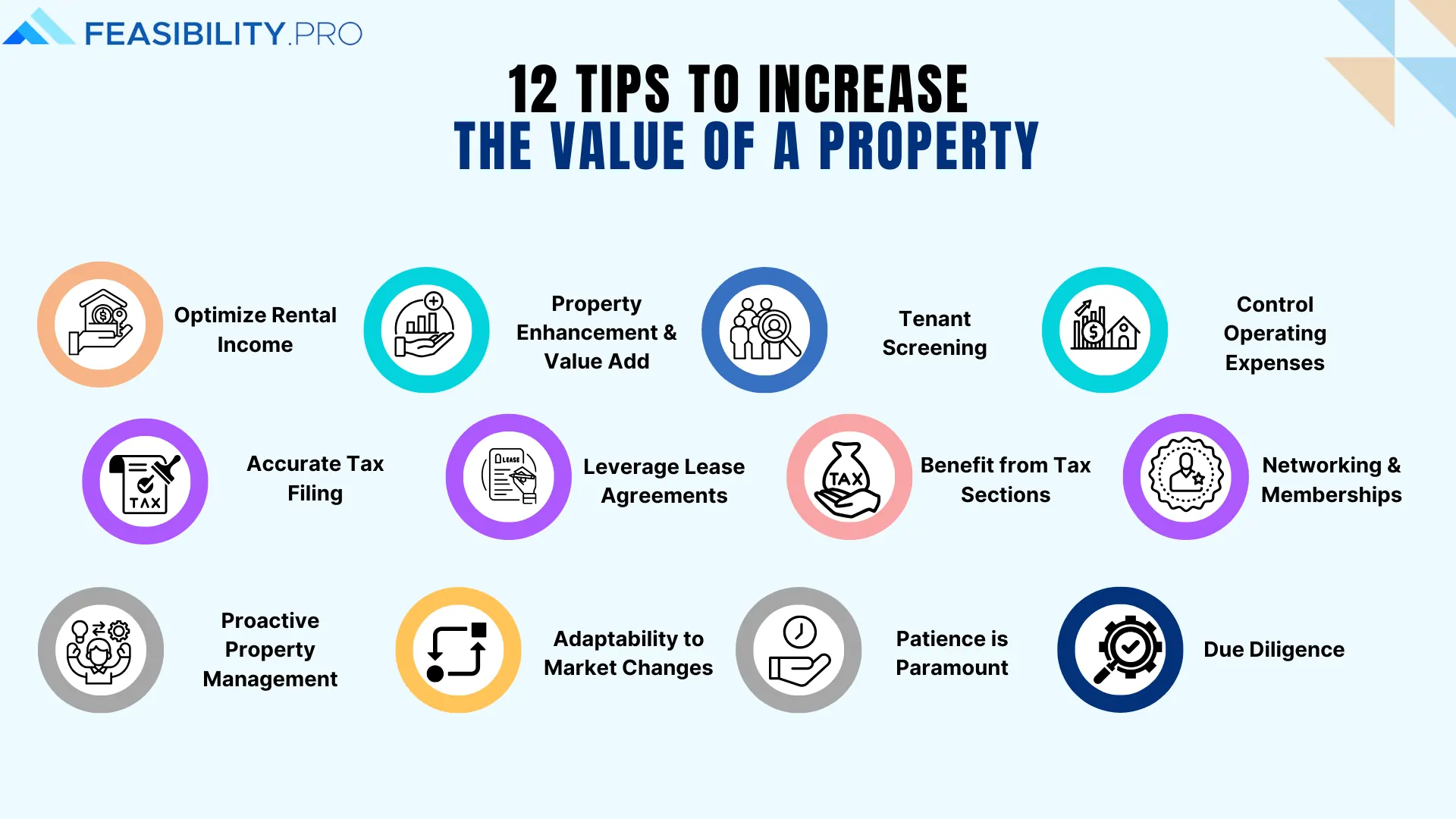
12 Tips to Increase the Value of a Property
Beyond the fundamental elements, implementing these strategies can significantly enhance your real estate investment portfolio:
1. Optimize Rental Income
Set competitive rents aligned with market rates. Regularly review and adjust rents to account for inflation and market demand, ensuring a steady and growing cash inflow. This is vital for rental property investment.
2. Property Enhancement & Value Add
Invest in smart upgrades and improvements. Adding features like a washing machine, fridge, or even minor cosmetic enhancements can justify higher rents and increase your property's appeal. Focus on value-add real estate strategies.
3. Tenant Screening
Diligently screen prospective tenants. Look for individuals or businesses with stable finances and a history of long-term tenancy. A thorough background check minimizes payment delays and property damage, protecting your investment income.
4. Control Operating Expenses
Proactively manage and reduce costs like repairs, maintenance, and taxes. Address necessary repairs promptly to avoid larger, more expensive issues down the line (e.g., electrical shortcuts). Opt for energy-efficient solutions like LED lighting to cut utility bills. This directly impacts your real estate cash flow.
5. Accurate Tax Filing
Property tax is a significant expense. Ensure accurate property valuation to avoid overpaying. File your property taxes on time to prevent penalties. Understanding the local tax structure and its impact on your real estate profitability is crucial.
6. Leverage Lease Agreements
Implement clear and comprehensive lease agreements. A well-structured lease provides consistency in your cash flow for extended periods, reducing vacancy risks and providing financial stability. This is key for passive income real estate.
7. Benefit from Tax Sections
Familiarize yourself with relevant tax sections (e.g., Section 24, Section 80, depreciation, capital gains) that can offer significant benefits to property investors in your region. Consult a tax professional for personalized advice.
8. Networking & Memberships
Engage with real estate investment groups and associations. Networking can provide invaluable insights, potential investment opportunities, and expert advice that could make a significant difference to your portfolio.
9. Proactive Property Management
Treat your real estate investments like a business. Stay informed about market trends, potential risks, and opportunities for growth. Effective asset management is critical to long-term success.
10. Adaptability to Market Changes
The real estate market is fluid. Avoid becoming overly attached to a property if its surroundings or market conditions are declining. Invest in areas with strong growth potential. If an area is experiencing a downturn, be prepared to sell to mitigate losses. This emphasizes strategic real estate decisions.
11. Patience is Paramount
Real estate investing is a long-game. Don't expect overnight riches. It requires extensive research before buying and continuous monitoring afterward to ensure sustained growth. Long-term real estate investment yields the best results.
12. Due Diligence
Never rely solely on third-party information. Conduct your own thorough due diligence on facts, figures, future projections, and the surrounding environment of any potential investment. This real estate research will safeguard your interests.
Final Thoughts
A savvy real estate investor often looks to buy real estate during a recession or at the beginning of a market upswing. The goal is to sell when prices are at their peak, ensuring substantial returns on your real estate portfolio.
We hope this guide helps you in your journey to maximize your real estate investment. Share your thoughts and questions in the comments below!
You May Also Like To Read : Pros and Cons of Investing in Real Estate