How to Use a Residual Land Value Tool
In property development, every successful project starts with one critical question: How much should I pay for the land? Get that answer wrong, and your property development profits could vanish before the first brick is laid. That’s where understanding how to use a Residual Land Value tool becomes essential.
This blog simplifies what residual land value calculation is, how the tool works, and—most importantly—how it can guide smarter, more profitable decisions in your next project. Whether you're a seasoned investor or just starting out, this guide will help you make sense of one of the most important land valuation methods available today.
To Know More Watch Residual Land Value [Video]
What Is Residual Land Value?
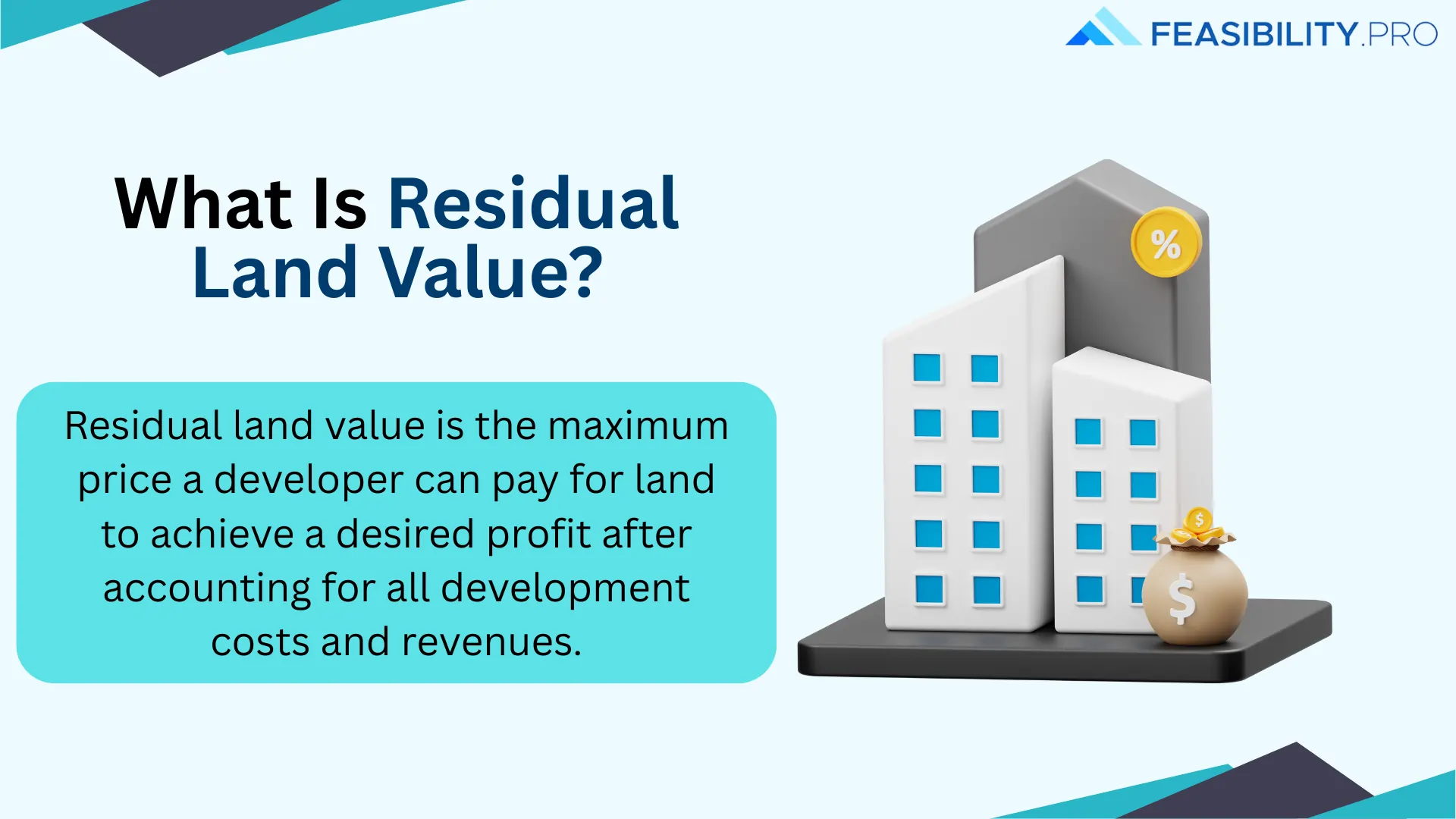
Residual Land Value (RLV) is a method developers use to determine the maximum price they can afford to pay for a development site while still achieving acceptable property development profits.
Here’s the basic formula:
Residual Land Value = Gross Development Value – (Development Costs + Developer’s Profit)
- Gross Development Value (GDV): The projected market value of the completed project.
- Development Costs: Includes construction, professional services, permits, financing, contingencies, etc.
- Developer’s Profit: The expected return—typically calculated as a percentage of GDV.
This residual land value calculation helps determine a realistic “walk-away price,” so you never overpay for land based on assumptions or emotion.
You May Also Like to Read What is Property Development Feasibility Software?
Why Use a Residual Land Value Tool?
Among various land valuation methods, the RLV tool stands out for its practical application in real-world scenarios. It’s particularly helpful when:
- You're developing in areas with no recent comparable sales.
- You need to assess real estate development feasibility across multiple project options.
- You're entering negotiations with sellers or investors.
- Lenders or investors require a solid financial feasibility study.
Using the tool allows you to base decisions on reliable data rather than assumptions, keeping your focus on potential returns.
You May Also Like to Read How Feasibility Studies Prevent Costly Mistakes in Real Estate Development
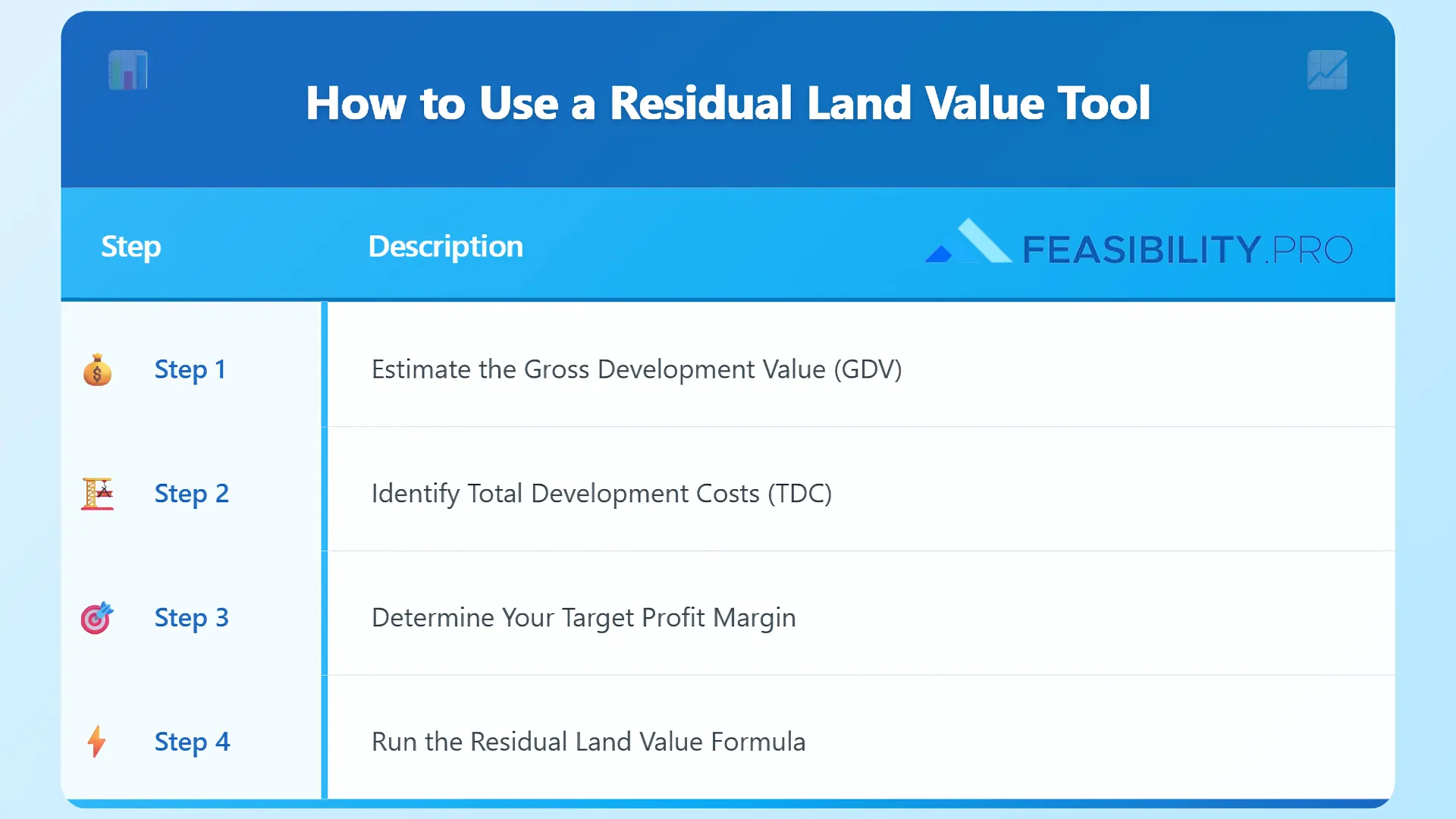
Step-by-Step Guide: How to Use a Residual Land Value Tool
Let’s explore how to apply the RLV tool in a structured, strategic way.
Step 1: Estimate the Gross Development Value (GDV)
Your Gross Development Value is the projected total sale value of the completed development.
To estimate GDV:
- Analyze recent sales of similar properties in the area.
- Factor in demand trends, market cycles, and inflation.
- Consult experienced agents or certified values for a professional outlook.
💡 Tip: Be conservative. Overestimating GDV is a common error that can skew your entire feasibility model.
Step 2: Identify Total Development Costs (TDC)
Accurate costing is essential to ensure project viability. Include:
- Construction Costs: Labor, materials, and site preparation.
- Professional Fees: Architects, engineers, consultants.
- Regulatory Costs: Permits, council approvals, environmental assessments.
- Marketing & Sales: Promotion, staging, and agent commissions.
- Contingencies: Allocate 5–10% to cover unforeseen costs.
- Financing: Interest and loan costs if borrowing is involved.
Adding these gives you the Total Development Cost, one of the pillars of residual land value calculation.
Step 3: Determine Your Target Profit Margin
Every developer has a target return—usually 15–25% of GDV.
Including this figure in your RLV model ensures the project remains worthwhile. It provides a buffer to manage risks while protecting your intended property development profits.
Step 4: Run the Residual Land Value Formula
Apply your data:
- GDV: $1.20 Million
- Development Costs: $783,000
- Profit Target: $181,000
RLV = $1,200,000 – ($783,000 + $181,000) = $236,000
Your walk-away price is $236,000. Pay more than this, and your real estate development feasibility begins to break down.
You May Also Like To Read Real Estate Development Feasibility Study: The Ultimate Guide
How to Maximize Profits Using Residual Land Value Insights?
Beyond its basic function, the RLV tool becomes a powerful planning asset. Here’s how to use it strategically:
1. Compare Development Scenarios
Should you build duplexes or high-rise apartments? Add a basement or rooftop garden? Each choice changes the math. Use the RLV tool to:
- Test different layouts or property types
- Evaluate profit outcomes across options
- Factor in timelines, approvals, or additional costs
You’ll gain clarity on which scenario delivers the best ROI.
2. Strengthen Your Negotiation Power
By showing sellers a calculated residual land value, you shift the conversation from emotions to facts. When the seller’s asking price exceeds your RLV, you can confidently negotiate—or walk away.
3. Improve Your Pitch to Lenders
Banks and private lenders expect robust feasibility modeling. Your ability to show a clear land development feasibility plan using RLV demonstrates professionalism and minimizes perceived risk—leading to better funding outcomes.
4. Minimize Risk, Maximize Profit
Real estate is full of variables. The RLV tool brings discipline to the process, helping you:
- Avoid overpaying in hot markets
- Steer clear of emotionally driven deals
- Maintain your desired property development profits
Common Mistakes to Avoid in RLV Calculations
- Skipping soft costs like legal or sales fees
- Using optimistic assumptions for GDV
- Ignoring cost inflation or unexpected delays
- Forgetting to add contingency buffers
✅ Use detailed, conservative estimates for accuracy in your RLV.
Final Thoughts
Knowing how to use a Residual Land Value tool is essential for any developer aiming to build smart, profitable real estate ventures. It turns fuzzy assumptions into measurable facts, guiding your purchase decisions, funding plans, and project viability with clarity.
In a market where every decision impacts the bottom line, the RLV tool offers a competitive edge—especially when used alongside sound judgment, market research, and a disciplined approach to budgeting.