Feasibility Studies Prevent Costly Mistakes in Real Estate Development
Jumping into Real Estate projects without understanding the costs, demand, or legal issues involved? One word: “Risky!”
Many seasoned developers have faced painful setbacks due to misjudged land value, underestimated infrastructure costs, or overestimated market demand. Often, it's not a big mistake but a small-overlooked detail, a minor zoning constraint, missing soil report, flawed FSI assumptions or market saturation, that leads to the failure of a large-scale project.
It could be figured out before any of it actually happens in real life. That’s where it comes - “Feasibility study”.
What is Feasibility Study?
A feasibility study is your first line of defense (a safety net), a structured tool to validate assumptions, identify risks, and forecast returns before investing heavily. Whether you’re planning a residential township, commercial space, or mixed-use development, a well-done feasibility study puts the unknowns in front of your eyes.
You May Also Like to Read: What is Land Development Feasibility Study?
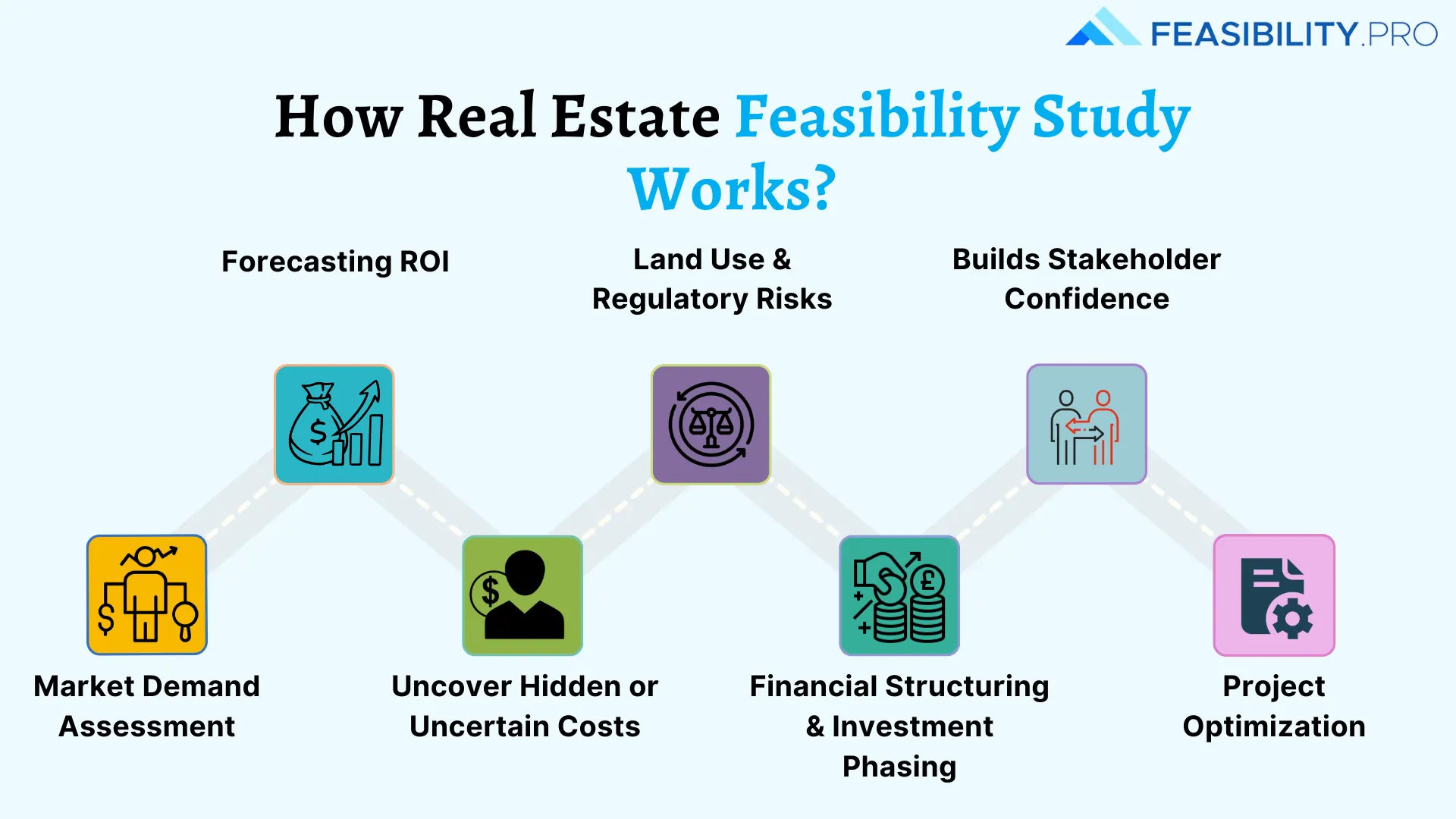
How Real Estate Feasibility Study Works?
Objective
The main purpose of a feasibility study is to provide a predictive analysis of a project’s success, both financially and operationally, by testing assumptions across multiple scenarios.
Market Demand Assessment
Most developers agree that “demand exists,” but feasibility isn’t about general demand. It's about matching the right product with the right price point and absorption window.
A detailed feasibility study breaks down:
- Price sensitivity and conversion behavior of buyers in the respective market,
- Inventory overhang and unsold stock velocity across segments
- Realistic absorption capacity, not just what brokers are claiming.
Using real demand metrics such as site visits vs. actual bookings, resale activity and income segmentation, the study projects how many units are likely to sell, at what pace, and at what risk-adjusted price. This helps prevent the classic mistake of launching premium inventory in a middle-income locality or overestimating the number of buyers who can close at the listed price.
By building Sensitivity tables around location trends, buyer profile shifts, and current vs. projected saturation, developers can simulate best-to-worst case scenarios and position their product mix accordingly.
Read More About: How to do a Market Feasibility Study?
Forecasting ROI: Clarity Before You Build
Feasibility studies give a clear view of expected returns and when the cash will come in. This early insight helps us refine plans, avoid late-stage surprises, and move faster toward profitability. It’s how developers stay smart, efficient and ahead of the curve.
Uncover Hidden or Uncertain Costs
What about soil testing, water connection, or road widening? These often-unplanned costs could make or break your budget. A good feasibility study includes a cost-risk matrix to assign probabilities to uncertain events, allowing you to provision smartly.
Land Use & Regulatory Risks
Zoning approvals, heritage overlays, restrictive by-laws, environmental restrictions: these can derail timelines and eat into margins. A feasibility study reviews current and upcoming regulations, identifies these risks upfront so you won’t be stuck after acquisition.
Financial Structuring & Investment Phasing
More than just IRR or NPV, a thorough study helps define the working capital requirement, debt/equity structuring, phasing of funds, and buffers for delays. This minimizes your risk of a mid-project funding crunch.
Builds Stakeholder Confidence & Lays Out a Clear Roadmap
Clarity builds trust. Whether you're dealing with equity partners, lenders or JV partners, people trust a project when they see more than just ambition. A feasibility report does exactly that. It shows stakeholders that the groundwork is solid: numbers validated, risks identified, and a clear roadmap laid out. It says, “We know where we’re going, and here’s how we’ll get there.”

Project Optimization
Feasibility isn’t just about saying yes or no; it helps fine-tune the project. From unit mix to phasing strategy, it lets you shape the design in a way that matches actual market demand and improves profitability. You’re not just building what looks good, you’re building what sells. And when investors see that the plan is backed by data and designed for maximum return, it becomes much easier to raise equity.
You May Also Like to Read: Feasibility Study – 12 Key Benefits and Components
Conclusion
A well-executed feasibility study is a tool to protect your investment and enhance your success rate. In real estate, making an informed decision early can save you from massive losses later. In an industry where margins are shrinking and timelines are tighter, running feasibility is not just smart; it’s essential. Think smart, build smarter.
Key Takeaways
✅In real estate, the costliest mistakes often aren’t obvious upfront; they unfold over time.
✅A detailed feasibility study helps you catch those issues early, while you can still pivot, restructure, or even walk away.
✅It’s not about delaying execution, it’s about ensuring that execution starts with confidence, clarity, and control.
✅Whether you're a first-time builder or an experienced developer, a small investment in a feasibility study can save millions in future costs, prevent reputation damage, and help you build smarter.

We help developers make smarter decisions and build a better, risk-aware future.
How Feasibility.pro helps Developers
At Feasibility.pro, we’ve built tools that help you make faster, smarter, and more confident decisions without starting from scratch.
Our SF Model1 gives you an intuitive, structured way to:
- Run multiple scenarios and highlight key risk factors before committing capital
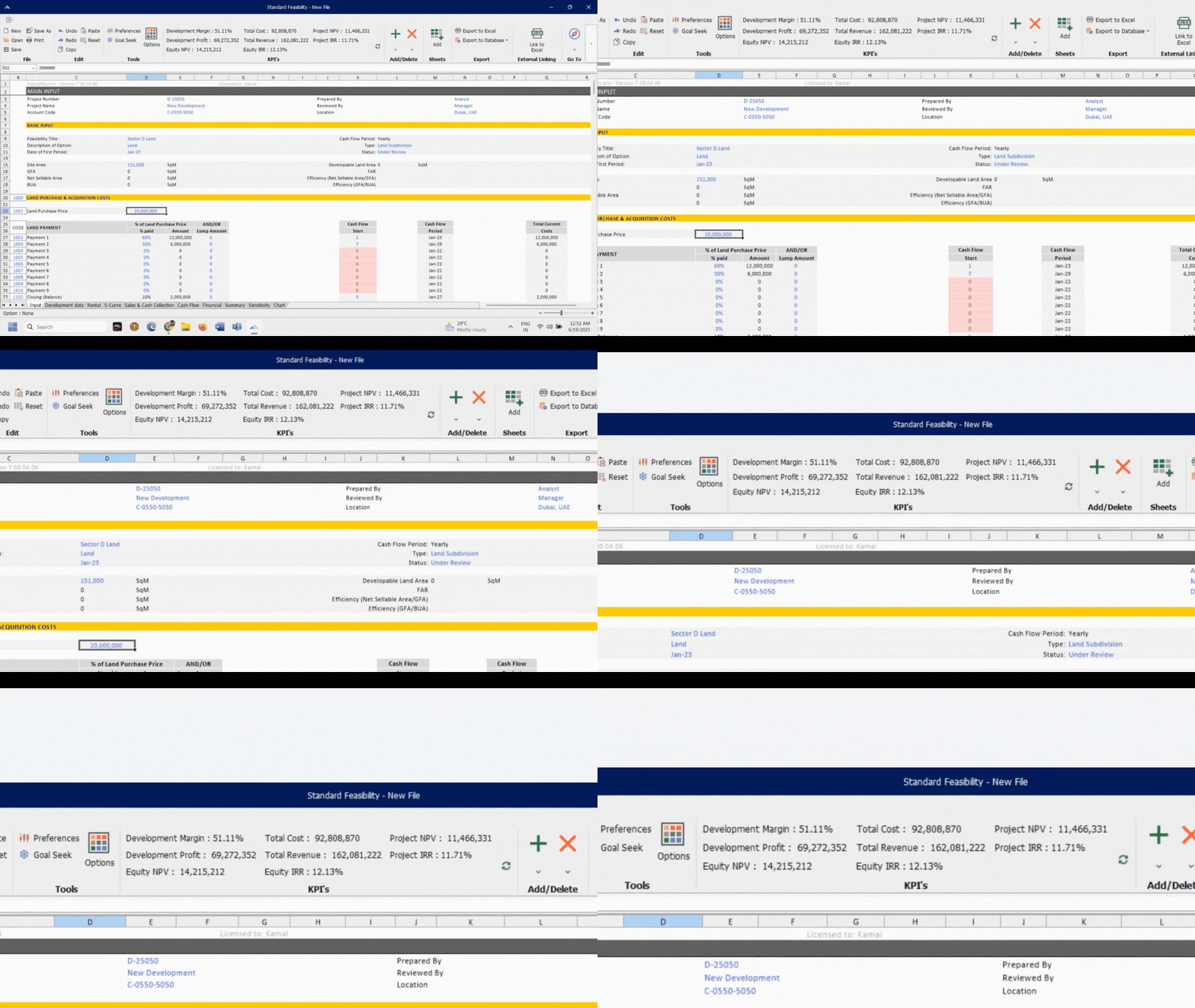
- View major KPIs directly within the input screen, making it easy to track project viability in real time
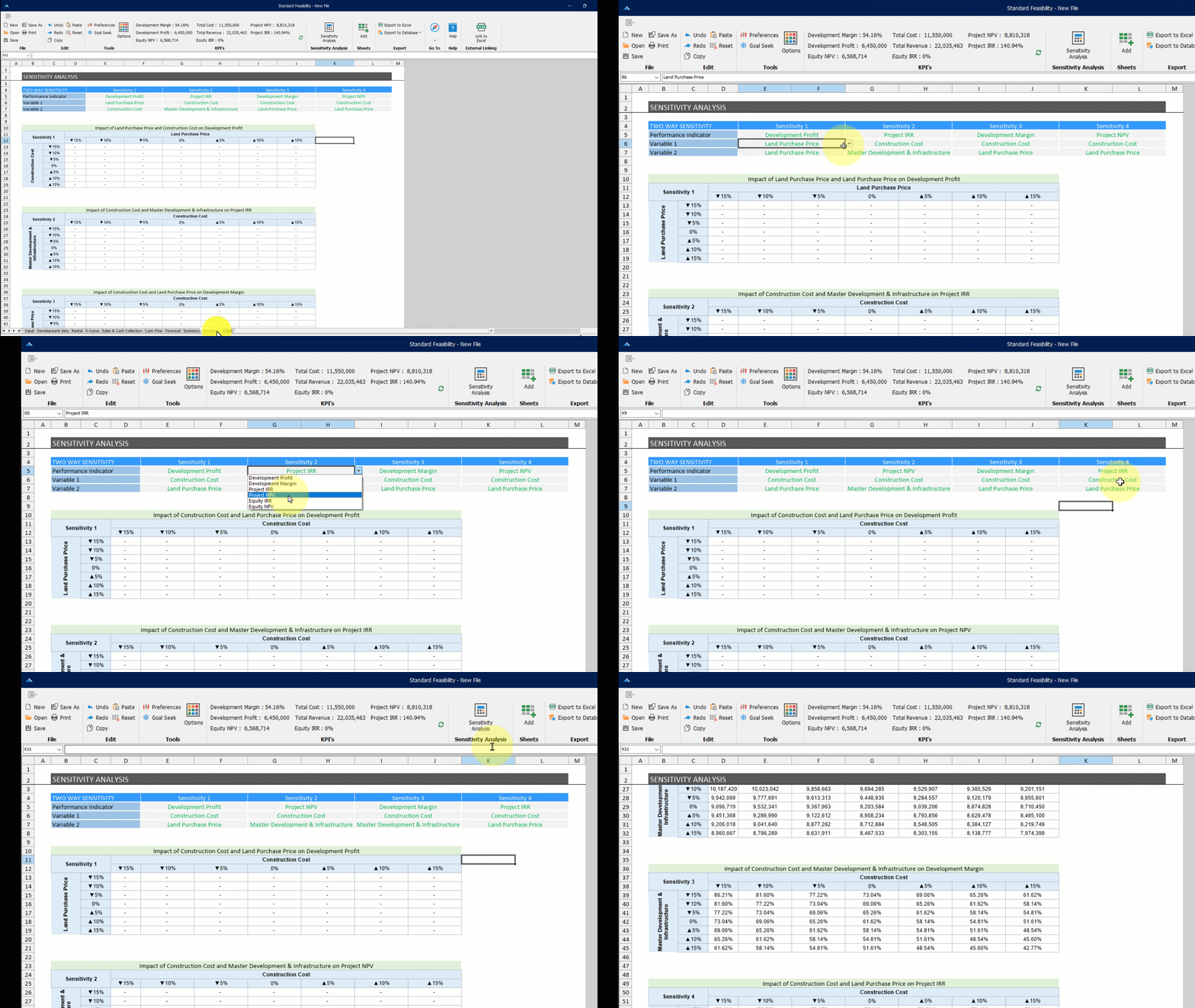
Perform Sensitivity analysis to see how your project responds to pricing, cost, or absorption changes
* Live KPIs While You Input
* Sensitivity Analysis
* Try it yourself
Explore the trial by clicking here.