
Real Estate Feasibility Software
Real estate is a world of exciting opportunities, but it’s also a world of significant risks. Before a single brick is laid or a single loan is secured, smart developers and investors ask a crucial question: "Is this project actually viable?" This is where real estate feasibility software steps in, acting as your digital crystal ball, helping you predict the potential success or failure of a property venture.
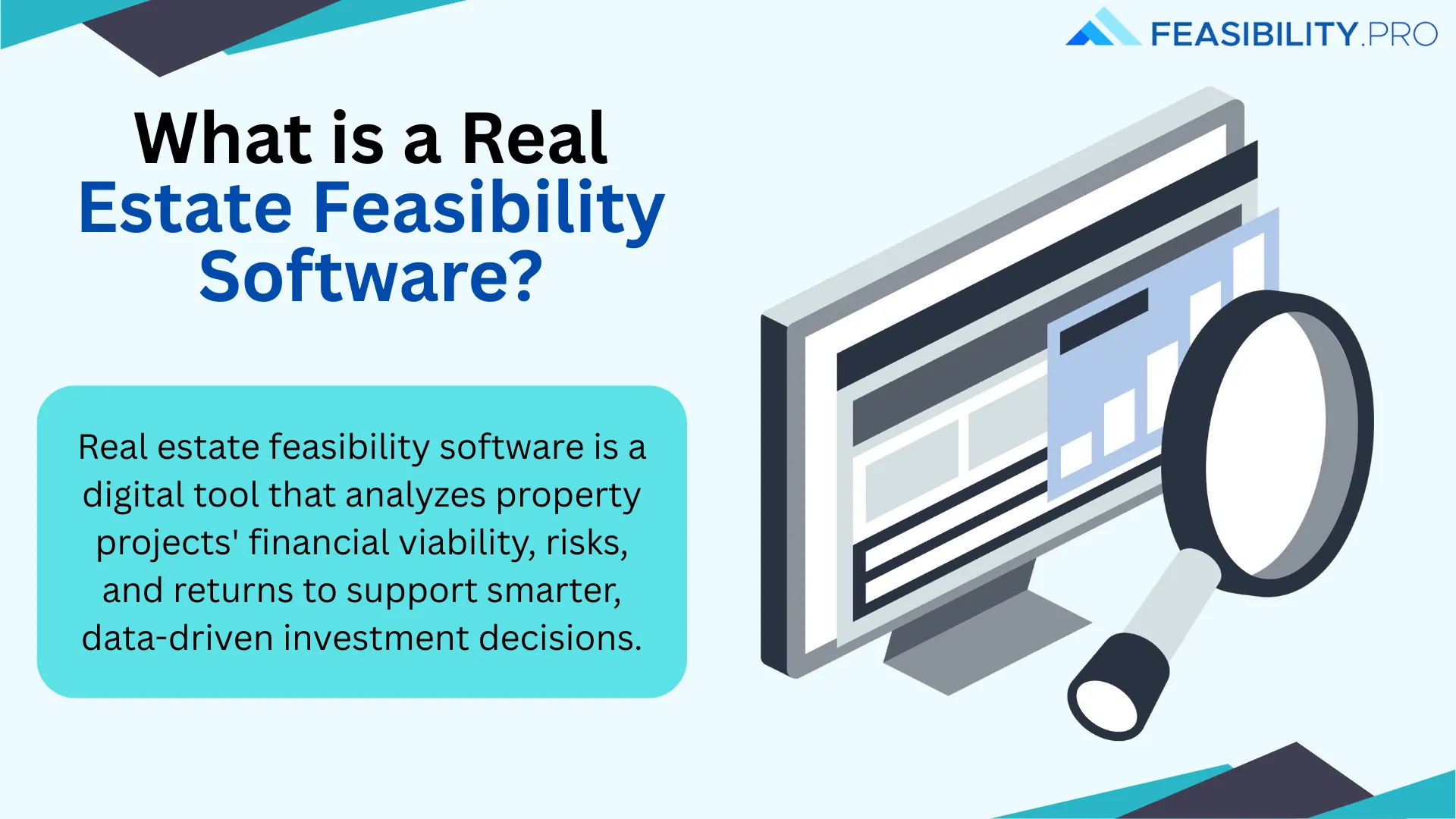
In essence, real estate feasibility software is a specialized tool designed to help individuals and companies involved in property assess the viability of a proposed project. It brings together financial modeling, market analysis, and risk assessment to give you a comprehensive picture of whether your real estate dream can become a profitable reality.
You May Also Like to Read: How to do a Market Feasibility Study?
Why Do You Need Real Estate Feasibility Software?
Imagine you're considering developing a new residential complex. Without proper analysis, you might invest millions only to discover later that the local market is oversaturated, construction costs are far higher than anticipated, or rental yields won't cover your mortgage. This is a nightmare scenario that real estate feasibility software aims to prevent.
These tools provide a structured way to analyze various aspects of a project. They help you factor in everything from land acquisition costs and construction expenses to potential rental income, sales prices, and ongoing operational costs. By crunching these numbers, the software generates projections that reveal the potential profitability, return on investment (ROI), and overall financial health of your proposed development.
The complexity of real estate projects demands a rigorous approach. Manual calculations, while possible for small, straightforward deals, quickly become unwieldy and prone to errors when dealing with multi-million dollar developments. Real estate feasibility software automates much of this process, saving you time, reducing human error, and allowing you to focus on strategic decision-making.
Key Features of Real Estate Feasibility Software
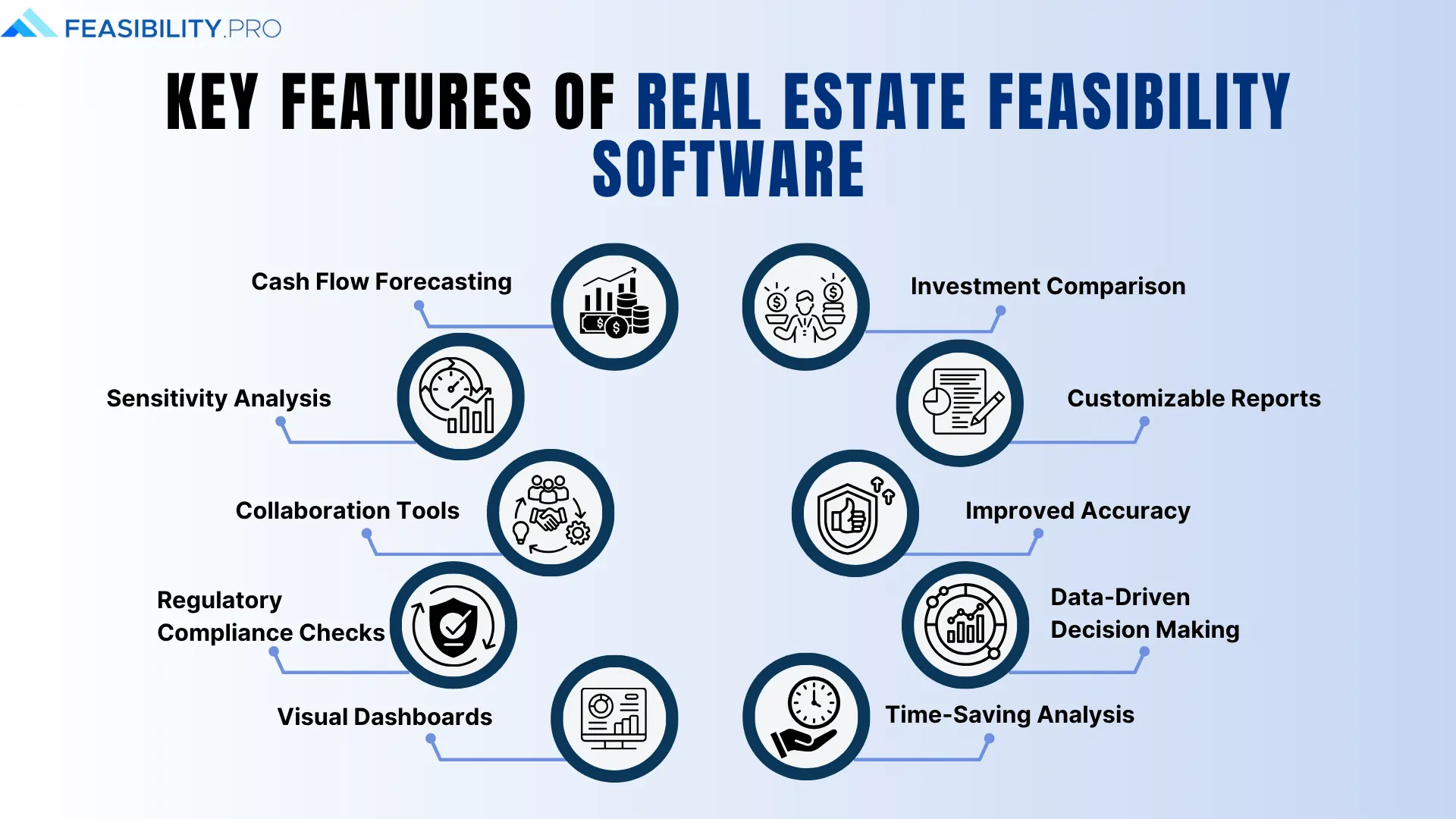
Modern real estate feasibility study software, like Feasibility.pro, comes packed with features designed to cover every angle of your analysis. One core feature is robust financial modeling. This allows you to input various revenue streams (like sales, rent, or commercial leases) and expenses (like land costs, construction, permits, and marketing). The software then calculates key financial metrics such as net present value (NPV), internal rate of return (IRR), and payback period, giving you a clear financial snapshot.
Another critical component is scenario planning. What if interest rates rise? What if construction is delayed? What if sales prices are lower than expected? Good feasibility software lets you test these "what-if" scenarios, allowing you to understand the project’s resilience to various market fluctuations and unexpected challenges. This helps you develop contingency plans and understand the risk profile of your investment.
Furthermore, many solutions integrate with or allow for the input of market data. This can include comparable sales data, rental rates, demographic trends, and economic forecasts. Understanding the market context is vital, and software can help you incorporate this information into your financial projections, leading to more accurate and reliable analyses.
You May Also Like to Read: Real Estate Development Feasibility Study: The Ultimate Guide
Who Uses Real Estate Feasibility Software?
The beauty of real estate feasibility software lies in its versatility. A wide range of professionals benefit from its capabilities.
Real estate developers are perhaps the most obvious users. They leverage these tools to validate their development concepts, secure financing, and make informed decisions about land acquisition and project scale. For them, it's about minimizing risk and maximizing profit.
Investors use the software to evaluate potential acquisitions, compare different investment opportunities, and understand the potential returns before committing capital. It helps them make data-driven investment choices that align with their financial goals.
Financial analysts and lenders rely on feasibility software to assess the creditworthiness of development projects. Banks and other financial institutions need to be confident that a project will generate sufficient cash flow to repay loans, and comprehensive feasibility studies provide that assurance.
Even students of real estate can benefit immensely. Learning to use this software provides invaluable practical experience in understanding the financial mechanics of property development and investment, preparing them for successful careers in the industry.
The Benefits of Using a Dedicated Tool Like Feasibility.pro
Using a dedicated real estate feasibility software like Feasibility.pro offers a multitude of advantages over traditional spreadsheets or back-of-the-envelope calculations.
Firstly, it provides accuracy and consistency. Automated calculations reduce the chance of human error, and standardized templates ensure that all relevant factors are considered for every project. This leads to more reliable and defensible feasibility studies.
Secondly, it significantly improves efficiency and speed. What might take days or even weeks with manual methods can be done in hours with specialized software. This allows you to analyze more opportunities, respond quickly to market changes, and spend more time on strategic thinking rather than tedious data entry.
Thirdly, it enhances decision-making. By presenting complex financial data in clear, digestible formats, the software empowers you to make more informed choices. The ability to run various scenarios helps you understand potential risks and rewards, leading to better-calculated risks.
Finally, it fosters better communication. A well-structured feasibility study generated by software provides a professional and comprehensive document that can be easily shared with stakeholders, investors, and lenders. This transparency builds trust and facilitates smoother project approvals and financing.
In a competitive real estate market, having a robust feasibility analysis tool is not just an advantage—it's a necessity. It equips you with the insights needed to navigate the complexities of property development and investment successfully.
Read More About: Feasibility Study – 12 Key Benefits and Components
If you want to try a ready-made Feasibility Study Template, download ours for free.
Why Feasibility.pro is the best real estate feasibility software?
When it comes to navigating the complexities of real estate investment, Feasibility.pro stands out as the premier real estate feasibility software. Its intuitive design ensures that both seasoned professionals and newcomers can easily conduct in-depth financial analysis. Feasibility.pro offers robust features for accurate projections, comprehensive scenario planning, and seamless integration of market data, helping you make informed decisions quickly. It simplifies intricate calculations, reduces errors, and generates professional reports that instill confidence in investors and lenders. With Feasibility.pro, you gain the clarity and efficiency needed to identify profitable opportunities and minimize risk, ensuring your real estate ventures are built on solid financial ground.
FAQ
Q1: Is real estate feasibility software only for large developers?
A1: Not at all! While large developers certainly use it, many solutions, including Feasibility.pro, are designed to be accessible and beneficial for individual investors, smaller development firms, and even students who want to understand the fundamentals of real estate finance.
Q2: Can I use basic spreadsheet software for feasibility studies?
A2: While it's possible to build basic models in spreadsheet software, dedicated real estate feasibility software offers pre-built templates, specialized financial functions, and reporting capabilities that are far more efficient and accurate for complex real estate projects. They are designed specifically for the nuances of property analysis.
Q3: How does real estate feasibility software help with securing financing?
A3: Lenders require a thorough understanding of a project's financial viability. Real estate feasibility software helps you generate comprehensive reports, including cash flow projections, ROI analysis, and risk assessments, which provide the detailed information lenders need to make informed decisions about providing capital.
Q4: What's the difference between feasibility software and general financial modeling software?
A4: While both involve financial modeling, real estate feasibility software is tailored specifically to the unique aspects of property development and investment. It includes specialized metrics, cost categories, and revenue streams relevant to real estate, making it more efficient and accurate for this particular industry.
Q5: Is it difficult to learn how to use real estate feasibility software?
A5: Most modern real estate feasibility software aims for user-friendliness. While there's a learning curve with any powerful tool, many providers offer tutorials, documentation, and support to help users get up to speed quickly. Platforms like Feasibility.pro often prioritize intuitive interfaces.