
How to Make Passive Income in Real Estate?
Passive income in real estate refers to earnings generated with minimal daily involvement after your initial investment and setup. Instead of actively managing properties full-time, investors use real estate investing strategies like rentals, REITs, or crowdfunding to generate steady cash flow, capital appreciation, or both.
Done right, real estate can provide income streams that grow over time — making it one of the most reliable long-term wealth-building vehicles.
You May Also Like to Read: How Real Estate Financing Works – Read This Before Going to Bank

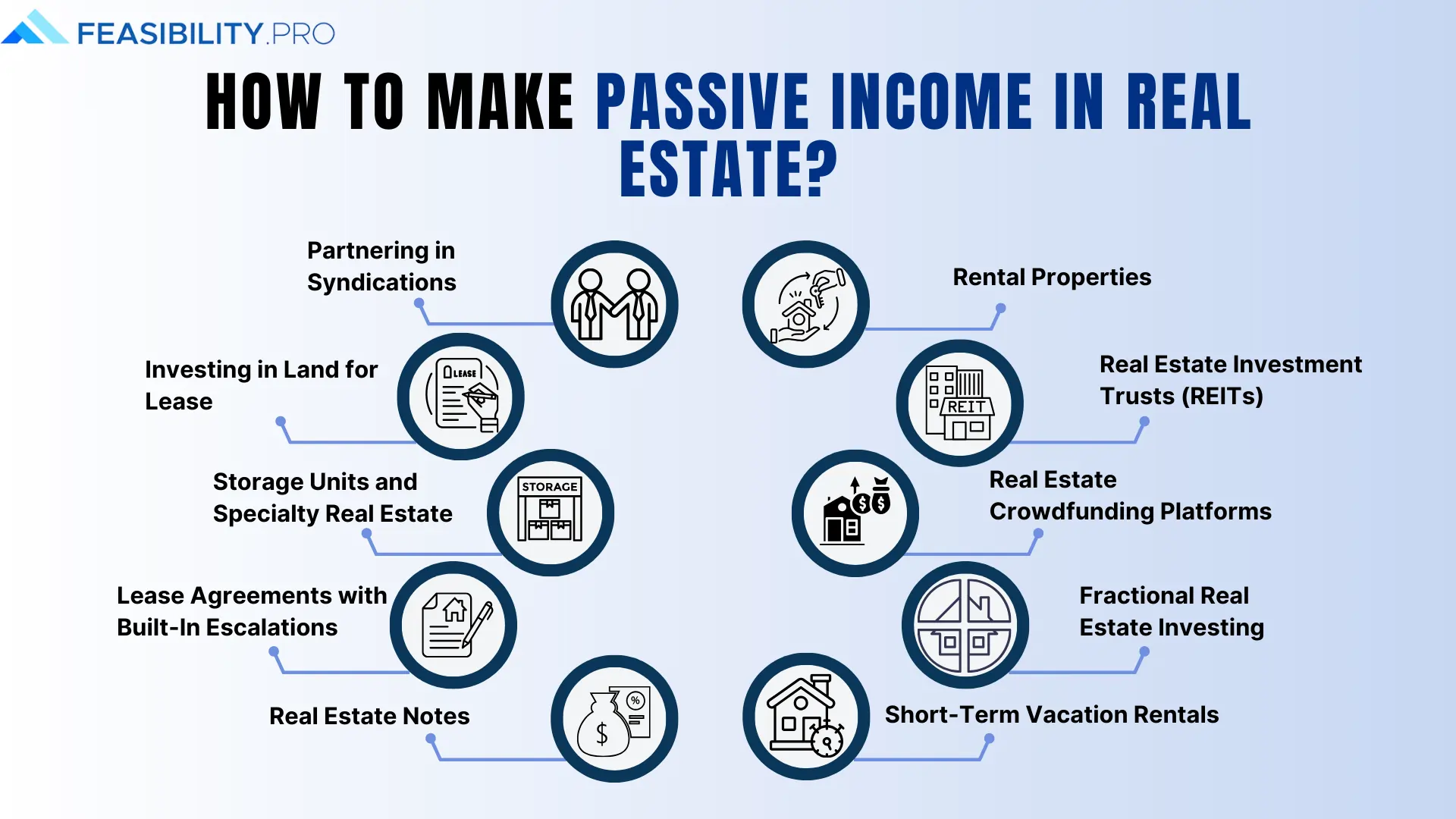
1. Rental Properties – The Classic Passive Income Source
Owning rental properties remains the most direct way to earn passive income in real estate.
Residential rentals (apartments, single-family homes) provide predictable monthly income.
Commercial rentals (office spaces, retail units) can yield higher returns but require larger capital.
How to make it passive: Hire a property management company to handle tenant screening, rent collection, and maintenance.
Pro tip: Choose high-demand areas with low vacancy rates to ensure consistent cash flow.
2. Real Estate Investment Trusts (REITs)
REITs for passive income allow you to invest in portfolios of income-generating properties without owning physical assets.
Publicly traded REITs can be bought like stocks.
Private REITs require higher minimum investments but often yield better returns.
Why they work: REITs distribute most of their taxable income as dividends, making them attractive for regular income seekers.
3. Real Estate Crowdfunding Platforms
Real estate crowdfunding enables you to invest in projects with a small amount of capital, alongside other investors.
Access to commercial or residential projects without buying an entire property.
Diversify by funding multiple developments.
Tip: Research the platform’s track record, fees, and developer reputation before committing.
4. Fractional Real Estate Investing
This modern real estate investing strategy lets you own a fraction of a property, sharing rental income and appreciation with other investors.
Lower capital requirement compared to whole property ownership.
Ideal for diversifying across multiple locations and property types.
Example: Platforms offering shares in luxury vacation homes or premium rental apartments.
5. Short-Term Vacation Rentals
Platforms like Airbnb and Vrbo make it possible to generate passive income in real estate through short-term stays.
Higher nightly rates than long-term rentals.
Flexible use of your property when not rented.
To keep it passive: Outsource guest communication, cleaning, and maintenance to local services.
6. Real Estate Notes
Instead of owning property, you can act as the lender.
Purchase mortgage notes and collect interest payments from borrowers.
Secure passive income without tenant management responsibilities.
Warning: Assess borrower credibility and loan terms carefully to reduce risk.
7. Lease Agreements with Built-In Escalations
Long-term leases with rent escalation clauses ensure your passive income in real estate grows over time without renegotiation hassles.
Common in commercial real estate deals.
Provides predictable and increasing cash flow.
8. Storage Units and Specialty Real Estate
Self-storage facilities, parking lots, and warehouses offer low-maintenance income streams.
Less wear and tear compared to residential rentals.
High demand in urban and industrial zones.
9. Investing in Land for Lease
Purchase land and lease it for farming, billboards, or cell towers.
Minimal upkeep.
Long-term contracts can lock in consistent returns.
10. Partnering in Syndications
Join forces with experienced real estate investors in syndications.
Passive involvement as the syndicator manages the deal.
You share profits from rental income and appreciation.
You May Also Like to Read: Property Investment for Beginners: Your Essential Guide
Final Thoughts
Building passive income in real estate requires smart strategy, proper due diligence, and sometimes, patience before seeing substantial returns. Whether you choose REITs for passive income, fractional real estate investing, or traditional rentals, focus on balancing risk with reward.
Diversifying across multiple real estate investing strategies protects your portfolio and ensures long-term, reliable income.
Author Bio
Emman Bernardino is a Content Writer in HousingInteractive. He currently focuses on SEO and blog writing. He enjoys driving on the open road, watching documentaries and historical films, or even playing video games when he’s not working.