

Step-by-Step Guide to Buying Commercial Property
Buying commercial property can be an exciting and profitable venture—if you do it right. While the process may seem straightforward, it’s important to remember that you’re dealing with a large-scale investment. Every step should be approached with careful research, strategic planning, and the right professional advice.
This comprehensive guide will walk you through the entire commercial property buying process, helping you make informed decisions and maximize your return on investment.
You May Also Like to Read: How to make passive income in real estate?

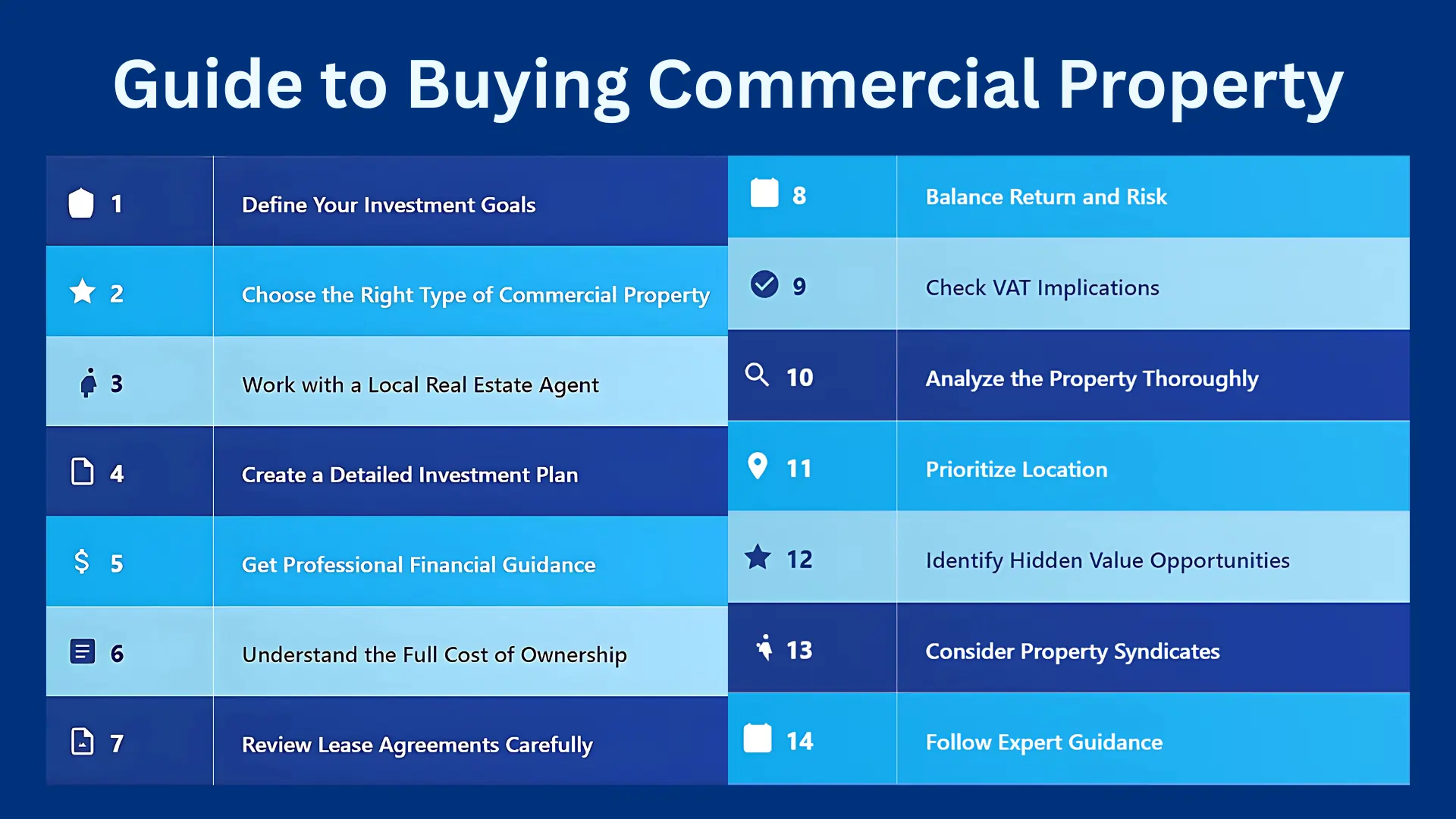
1. Define Your Investment Goals
Before you start browsing listings, clarify why you are investing in commercial real estate.
Is it for retirement planning?
Are you looking for long-term rental income?
Do you want a mix of capital growth and cash flow?
Whether you’re considering retail, industrial, or office spaces, remember: commercial real estate is best suited for medium- to long-term investment. Short-term flipping rarely works in this space due to higher acquisition costs.
2. Choose the Right Type of Commercial Property
When buying commercial property, you have multiple categories to consider:
Multifamily – From duplexes to large apartment complexes.
Office Buildings – Small commercial offices to high-rise towers.
Retail Spaces – From neighborhood coffee shops to major shopping centers.
Industrial – Warehouses, factories, and distribution hubs (think Amazon fulfillment centers).
Hospitality – Hotels, motels, and even short-term rental properties.
Do your research on market trends and compare similar transactions in the area. Look for indicators like new developments, property demand, and occupancy rates.
3. Work with a Local Real Estate Agent
A local commercial real estate agent can give you access to off-market opportunities. Many of the best deals never make it to public listings. Professionals often hear about them first and can help you act quickly.
4. Create a Detailed Investment Plan
Successful property investors never skip the planning stage. Outline:
Your budget and financing options
A step-by-step process for acquisition
Key documents and agreements you’ll need
A clear plan will keep you on track and prevent costly mistakes.
You May Also Like to Read: Discount Rate in Property Valuation
5. Get Professional Financial Guidance
Investing in commercial property for beginners can be overwhelming without expert financial advice. Consult with:
An accountant for tax-efficient strategies
At least two lending institutions for financing options
Be realistic about your borrowing capacity, but also consider future appreciation. With property values rising over time, you may be able to afford more than you initially thought.
6. Understand the Full Cost of Ownership
Don’t just focus on the purchase price. Consider hidden costs like:
Stamp duty
Management fees
Maintenance and service charges
7. Review Lease Agreements Carefully
When acquiring a property with tenants, scrutinize the lease clauses.
Avoid “get-out” provisions that let tenants exit early.
Check how rent reviews are structured—open market reviews often yield better returns than indexed clauses.
8. Balance Return and Risk
High returns often come with higher risks. Build your portfolio gradually, starting with stable, lower-risk investments before venturing into high-yield properties.
9. Check VAT Implications
Before buying commercial property, verify its VAT status. VAT can significantly increase your costs, and some tenants cannot reclaim it. Always seek tax advice before deciding to register for VAT.
10. Analyze the Property Thoroughly
Do a complete property analysis with your agent. If the property looks promising, get independent opinions from:
An accountant
A solicitor
An engineer
Evaluate it from a tenant’s perspective—location, layout, size, and facilities all influence demand.
11. Prioritize Location
Location is everything in commercial real estate. Look for:
Proximity to key amenities (schools, hospitals, shopping centers)
Employment growth in the area
Upcoming infrastructure projects
Also check for zoning and planning restrictions that could affect future renovations.
12. Identify Hidden Value Opportunities
Ask yourself:
Can I repurpose part of the property for higher income?
Are there pending approvals for nearby developments?
Can I sell unused assets like a liquor license or surplus land?
Unlocking hidden value can significantly boost your returns.
13. Consider Property Syndicates
Pooling resources with trusted family or friends can help you acquire larger, more lucrative properties. But always get professional advice and set clear agreements before investing together.
14. Follow Expert Guidance
A qualified commercial property specialist can guide you through every step of the buying process. Their market knowledge, negotiation skills, and network can save you time, money, and stress.
You May Also Like to Read: How Real Estate Financing Works – Read This Before Going to Bank
Final Thoughts
By following these 14 proven steps to buying commercial property, you’ll position yourself to make smarter, more profitable investments. Whether you’re a beginner or a seasoned investor, the key is research, planning, and expert advice.
Now, you’re ready to make your next move in commercial real estate investing—and make it count.
Hope you enjoyed this post on homeownership, let me know what you think in the comment section below.
Frequently Asked Questions About Buying Commercial Property
1. What is the first step in buying commercial property?
The first step in buying commercial property is understanding your investment goals and budget. Whether you’re a beginner or an experienced investor, clearly define your purpose—such as generating rental income, long-term capital appreciation, or expanding a business location. Then, research the local commercial real estate market before making a move.
2. Is buying commercial property a good investment for beginners?
Yes, buying commercial property can be highly profitable for beginners if approached with research and strategy. Start small, focus on stable markets, and consider lower-risk assets such as office spaces or retail units with long-term tenants. A commercial real estate guide can help you navigate the buying process.
3. How do I finance my commercial real estate investment?
Financing options for commercial property include traditional bank loans, commercial mortgage-backed securities (CMBS), private lenders, and crowdfunding platforms. Before committing, compare interest rates, repayment terms, and eligibility requirements to ensure your investment maintains a healthy cash flow.
4. What are the main risks of investing in commercial property?
Risks in commercial property buying include market downturns, tenant vacancies, and unexpected maintenance costs. You can mitigate these by conducting thorough due diligence, securing long-term leases, and diversifying your property portfolio.
5. How long does the commercial property buying process take?
The commercial property buying process typically takes 3–6 months, depending on factors like financing approval, property inspections, and negotiations. Having a commercial real estate lawyer can speed up documentation and reduce delays.
6. Should I invest in commercial property for rental income or resale value?
Both strategies can be profitable. Buying commercial property for rental income provides steady cash flow, while purchasing for resale value focuses on long-term appreciation. Many investors combine the two for maximum returns.
7. What documents are required when buying commercial real estate?
Key documents include the purchase agreement, title deed, lease contracts, zoning compliance certificates, and property inspection reports. Keeping these organized is crucial for a smooth transaction.
8. Is commercial property better than residential for investment?
While residential real estate offers stability, commercial real estate investing typically yields higher returns and longer lease agreements. However, it requires more capital and market knowledge.








On Point. Thanks for this wonderful content.
Buying commercial property demands a significant financial commitment, so you should seek out financial help. Consult with a tax professional and at least two lending institutions to figure out the most tax-efficient investing plan possible.