How Real Estate Financing Works – A Complete Guide Before You Visit the Bank
If you’re planning a property purchase or development, walking straight into a bank without knowing your financing options can cost you time, money, and negotiating power.
This guide explains how real estate financing works — from understanding the bank’s perspective to exploring alternative funding options — so you can approach financing with confidence and strategy.
You May Also Like To Read: How to find real estate deals?
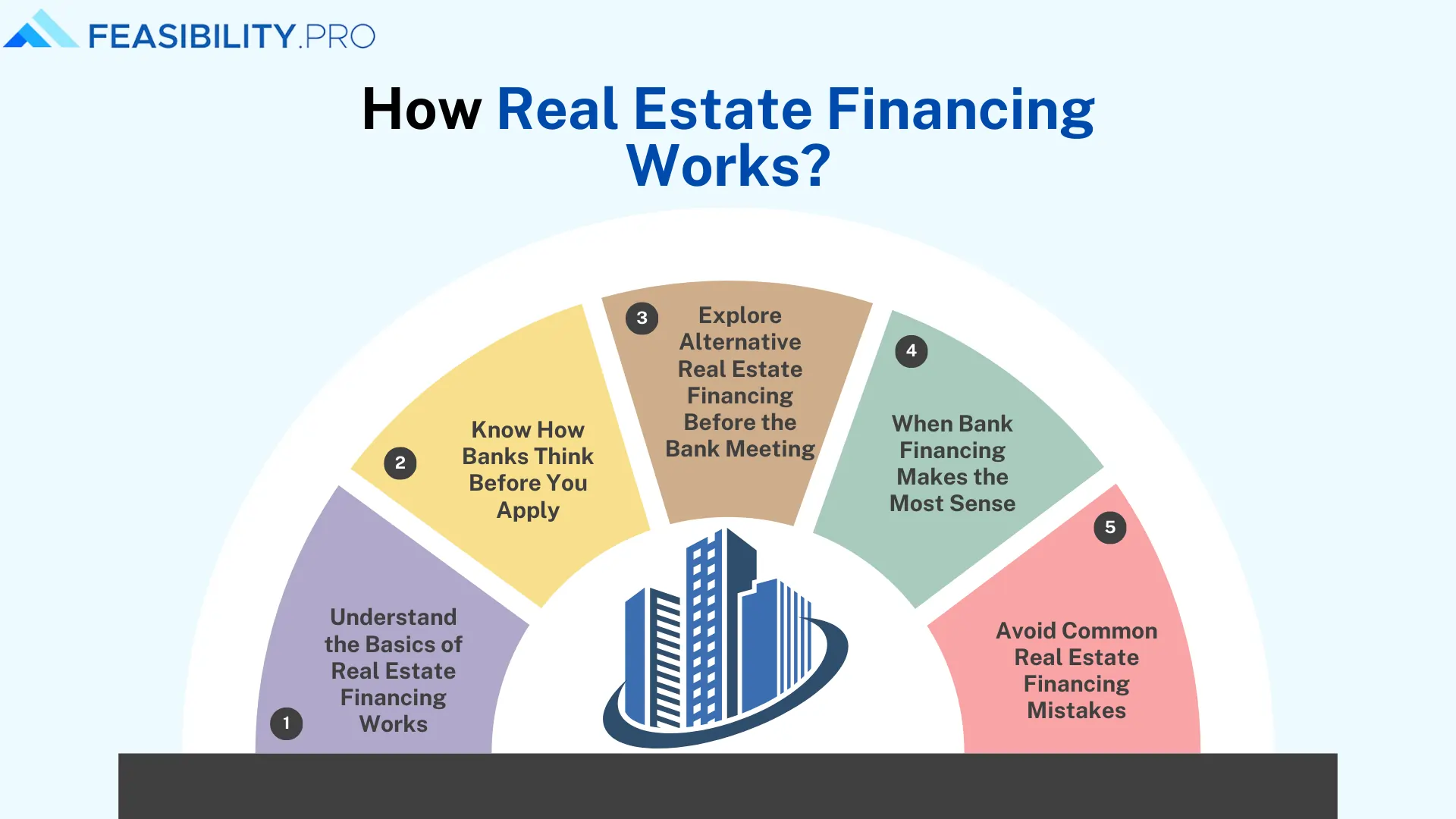
Step 1: Understand the Basics of Real Estate Financing Works
At its core, real estate financing means securing funds to buy, build, or improve property. This can be done through debt (borrowing money), equity (sharing ownership), or hybrid approaches.
Banks, private lenders, and crowdfunding platforms all have different requirements, interest rates, timelines, and risks. Knowing these differences before going to the bank will help you secure better terms or find smarter alternatives.
Step 2: Know How Banks Think Before You Apply
Banks follow the 3 C’s of Credit when evaluating a real estate loan:
Character – Your credit history and track record of repayment.
Collateral – The property or asset you pledge as security.
Capacity – Your ability to repay from income or project profits.
💡 Pro Tip: Get a free credit report, calculate your debt-to-income ratio, and prepare a professional project proposal before you approach the bank.
Step 3: Explore Alternative Real Estate Financing Before the Bank Meeting
1. Crowdfunding
Raise small amounts from many investors via online platforms.
Pros: Fast, digital, lower entry barriers.
Cons: Funding not guaranteed, platform fees apply.
2. Equity Financing
Bring in investors in exchange for ownership shares.
Pros: No debt repayment.
Cons: You give up part of your future profits and decision-making power.
3. Debt Crowdfunding
Borrow from a lender who splits your loan among private investors.
Pros: Faster than banks.
Cons: Higher interest rates.
4. Peer-to-Peer Lending
Borrow directly from individuals through online marketplaces.
Pros: Flexible terms, quick process.
Cons: Smaller loan amounts.
5. Credit Line Agreements
Borrow against an existing property’s equity as needed.
Pros: Pay interest only on what you use.
Cons: Risk losing the secured property if you default.
You May Also Like to Read: How to do Real Estate Investment Like a Pro?
Step 4: When Bank Financing Makes the Most Sense
While alternatives are growing in popularity, traditional bank loans still work best for:
Large-scale, long-term projects.
Borrowers with strong credit and collateral.
Those seeking lower interest rates and predictable repayments.
💡 Before you go to the bank:
Compare fixed vs variable interest rates.
Ask about hidden fees (processing, prepayment penalties).
Negotiate — you might get better terms than the initial offer.
Step 5: Avoid Common Real Estate Financing Mistakes
Going in unprepared: Always have a financial plan and supporting documents ready.
Focusing on one option: Compare at least three financing sources.
Ignoring total cost: Look beyond interest rates — factor in all fees and profit sharing.
You May Also Like To Read: Who are the real estate wholesalers?
Takeaway
Knowing how real estate financing works before you approach a bank puts you in control. It allows you to compare traditional loans with innovative funding methods like crowdfunding, equity partnerships, and peer-to-peer lending — and to walk into any meeting with the upper hand.