
Property Investment for Beginners
Are you curious about property investment but feel overwhelmed or scared by the process? You're not alone! Many aspiring first-time investors feel this way, but with the right knowledge and a clear strategy, property investment can be a powerful path to financial growth.
At Feasibility.pro, we're dedicated to being your one-stop solution for all your property investment doubts and insecurities. Let's understand the world of real estate market and equip you with the basics to get started on your investment property journey.
Also read Real estate investment like a pro.
What is Property Investment?
Property investment fundamentally involves the purchase, ownership, rental, or sale of property with the primary goal of generating profit or income. This could mean buying a house to earn consistent rental income, or purchasing a property with the intention of reselling it later for a profit.
Real estate investments can be long-term, focusing on appreciation over many years and steady rental income, or short-term, aiming for quick profits through strategies like house flipping. Your approach will depend on your financial goals, risk tolerance, and the current real estate market conditions.
You can venture into property investment individually, form a partnership, or join a group, offering flexibility to suit different capital levels and risk appetites.
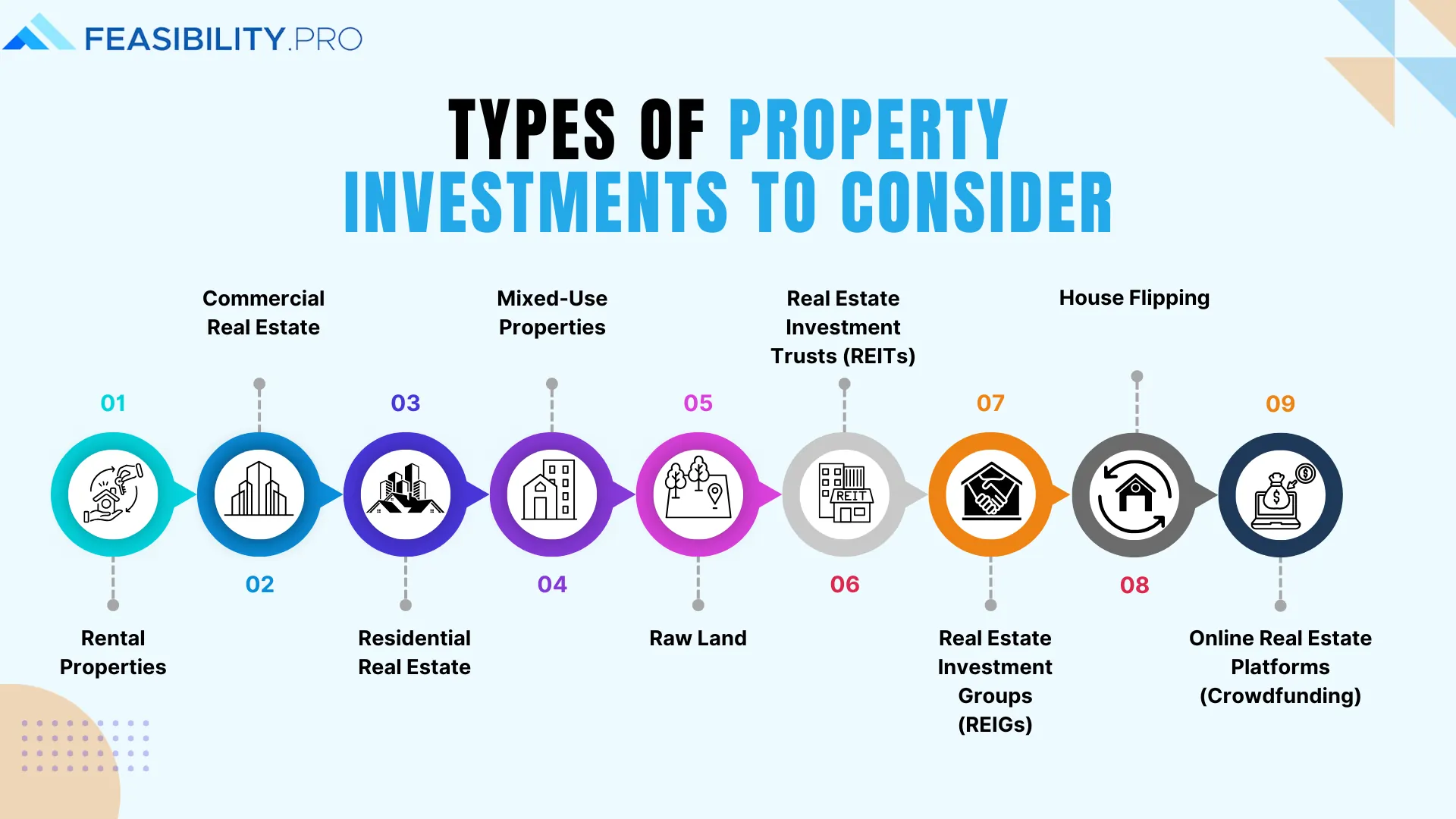
Types of Property Investments to Consider
Understanding the different types of property investment is crucial for a beginner real estate investor. Each offers unique benefits and considerations.
1. Rental Properties
Starting rental property business is a classic real estate investment strategy, perfect for those with some DIY skills, patience to manage tenants, and available time. This involves purchasing residential or buying commercial properties and leasing them out to generate regular income.
Pros: Provides steady cash flow, potential for long-term appreciation, and properties can be leveraged to acquire more assets over time. A great way to generate passive income in real estate.
Cons: Requires hands-on management (or hiring a property manager), upfront costs for maintenance, and the risk of vacancies or non-paying tenants.
2. Commercial Real Estate
Commercial real estate typically refers to properties rented out for business use, such as offices, retail spaces, or factories. These generally offer higher rents and longer lease terms, providing greater income stability. Often, tenants are responsible for property maintenance.
Pros: Higher potential rental income, longer lease agreements, and professional tenants.
Cons: Often requires a larger initial investment capital, more complex lease agreements, and can be more susceptible to economic downturns affecting businesses. If you're considering commercial property investment, research local business growth.
3. Residential Real Estate
Residential real estate encompasses properties used for living, like apartments, houses, or villas. This is often considered a safer investment option due to consistent demand for housing.
Pros: Steady monthly income, generally lower initial investment compared to commercial properties, and easier to understand for beginners. You can find excellent residential property investment advantages for beginners in growing cities like Agra.
Cons: Shorter lease terms, more frequent tenant turnover, and landlord responsibilities for maintenance.
4. Mixed-Use Properties
Mixed-use properties combine both commercial and residential purposes within a single development. For example, a building might have retail shops on the ground floor and apartments on the upper floors.
Pros: Diversified income streams, appealing to a wider range of tenants, and potential for higher overall returns.
Cons: Can be more complex to manage due to varying tenant needs and regulations.
5. Raw Land
Investing in raw land involves purchasing undeveloped plots. This requires extensive research into future development plans and zoning regulations. The growth of the land and your potential profit heavily depend on your informed decisions.
Pros: Lower property taxes, minimal maintenance, and significant appreciation potential if the area develops.
Cons: No immediate income generation, requires substantial research, and can be a long-term investment. This is a raw land investment strategy.
6. Real Estate Investment Trusts (REITs)
REITs (pronounced "REETs") are companies that own, operate, or finance income-generating real estate. Investing in a REIT is similar to investing in a stock; you buy shares in the company, which then invests in properties like apartments, hospitals, hotels, or shopping malls.
Pros: High liquidity (many trade on major exchanges), diversification into various property types, and regular dividend payments (as REITs must distribute 90% of their taxable income to shareholders).
Cons: Subject to stock market fluctuations, and some non-traded REITs can be illiquid. Ideal for investors seeking portfolio exposure to real estate without direct property ownership. Look into REITs explained for beginners.
7. Real Estate Investment Groups (REIGs)
REIGs are perfect for those who have some investment capital and want to own rental real estate without the hands-on management. In an REIG, a company buys or builds a set of properties, and investors purchase individual units. The company then collectively manages all units, handling maintenance, advertising, and tenant relations in exchange for a percentage of the rent.
Pros: Passive income, professional management, and often includes a vacancy pool to ensure some income even if your unit is empty.
Cons: Less control over the property, and fees are deducted by the management company.
8. House Flipping
House flipping involves buying undervalued properties, renovating them as inexpensively as possible, and then reselling them quickly for a higher price. This strategy demands significant experience in real estate valuation, marketing, and renovation.
Pros: Potential for significant returns in a short period, and capital is tied up for a shorter duration.
Cons: Requires deep market knowledge, high risk if the real estate market cools unexpectedly or renovations go over budget, and often requires substantial cash upfront. Learn how to start house flipping business.
9. Online Real Estate Platforms (Crowdfunding)
Real estate crowdfunding allows large groups of people to contribute small amounts of money to invest in a company or a project, typically through online platforms. This is a growing concept, enabling diversification into real estate without a massive individual stake.
Pros: Lower entry barrier, diversification into larger commercial or residential deals, and potential for attractive returns. It’s an accessible way to invest in property.
Cons: Investments are often illiquid (money locked for several years), some projects on these platforms might be riskier, and you need to ensure the platform is legitimate. Question, is real estate crowdfunding safe? Do your homework.
You may also like to read Multifamily vs. Single Family Investment?
Key Considerations for Property Investment
Before diving into property investment, keep these crucial factors in mind:
Location
The location is paramount. It dictates the property's future value, rental demand, and potential for appreciation. Research areas with strong economic growth, good infrastructure, and future development plans. A seemingly underdeveloped area today could be a goldmine in five years. Consider property investment in developing cities.
Current Market Conditions
Understanding the current market condition is vital. If the price of the property is more than the actual condition, it would be an unfavorable condition to buy but a favorable condition to sell. Hence, a little research work is required to understand the real estate market.
Thorough Research
Proper research is non-negotiable. Don't rely solely on word-of-mouth or current appearances. Analyze historical data, future projections, and local demographics. The more informed you are, the wiser your investment decisions will be. This is a critical property investment tip for beginners.
Legal Procedure and Due Diligence
Always adhere to the legal procedure for buying or selling property. This includes verifying ownership history, zoning restrictions, and potential liens. Hire a qualified inspector to identify any structural or mechanical issues. Skipping these steps can lead to costly problems down the line. This step is key for due diligence on investment property.
Negotiation Skills
As an investor, your negotiation skills can significantly impact your profit margin. Aim for a mutually beneficial price based on market prices, and don't be afraid to ask for a discount.
Risk Assessment
Every investment carries risk. Analyze the potential downsides of a property investment. Is the investment worth the risk? Or any other investment option would be safer? Consider contingency plans for vacancies, unexpected repairs, or market downturns. Understanding the risks of property investment is crucial.
Down Payment and Financing
Be prepared for the down payment, which typically ranges from 10-25% of the property's total value. Ensure you have sufficient finances or have explored property investment loans with banks, completing all necessary formalities for real estate financing.
Common Mistakes to Avoid in Property Investing
Even seasoned investors can make missteps. For beginners, being aware of these common pitfalls can save you from significant losses.
Being Emotional: Property investment should be a strategic decision, not an emotional one. Base your choices on thorough analysis of the market and financials, not personal attachment.
Neglecting Research: The biggest mistake is superficial research. Future potential, not just current status, holds the key to profit. Remember, research is a cornerstone of real estate investment for beginners.
Rushing Decisions: Property investment involves substantial capital. Take your time, explore all available options, and analyze each property thoroughly before committing. Don't rush your investment strategy.
Blind Trust: Don't blindly trust advice from people who come along your way. Don’t rely on word of mouth, do a property analysis and then conclude.
High Expectations: While property investment can be lucrative, it often takes time to yield significant profits. Maintain a realistic approach and understand that market uncertainties exist.
Ignoring Debts/Loans: It's highly recommended to clear existing high-interest debts (like student or personal loans) before taking on a new property investment. Stay debt-free before making a major real estate investment.
Insufficient Finances: Make sure you have enough money to invest. If you don’t have enough finances then you can seek a bank and clear all your formalities for loan application. Ensuring adequate finances is a key step in real estate investment financial planning.
You May Also Like To Read : What are the Pros and Cons of Investing in Real Estate?
Why Add Real Estate to Your Investment Portfolio?
Real estate is a distinct asset class that many financial experts believe should be part of a well-diversified investment portfolio. It often doesn't correlate directly with stocks or bonds, providing a hedge against market volatility. Beyond potential capital gains from appreciation, real estate can generate consistent passive income through rents or mortgage payments, contributing to your financial freedom.
Property investment demands knowledge, skills, patience, and time. It might seem challenging for beginners, but continuous learning and strategic decision-making will pave your way to earning significant profits and building wealth.